I drew a lot of inspiration from my visit to Tom Vuong’s bonsai garden. It wasn’t just the trees, but the way he handled them.
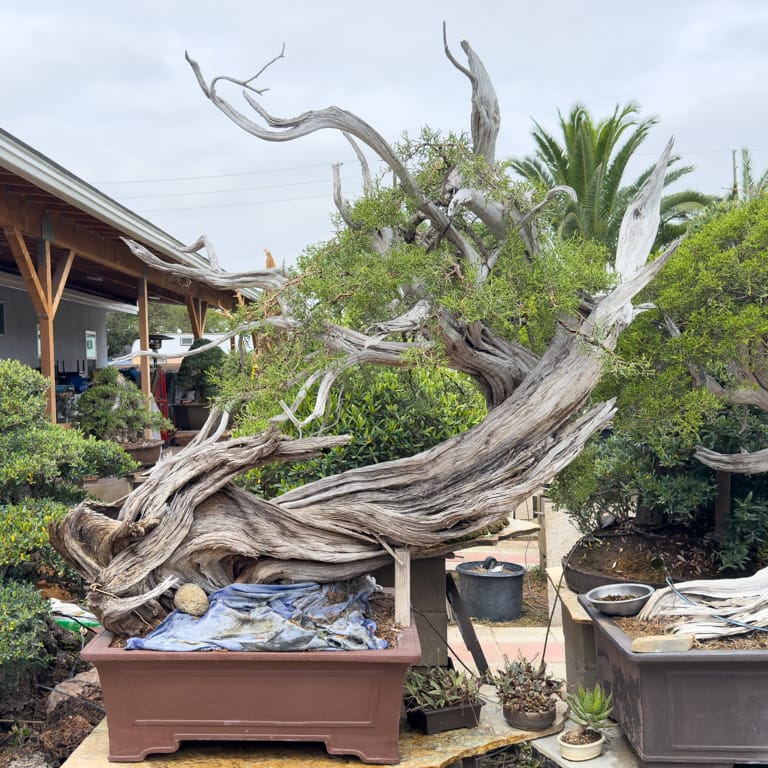
California juniper
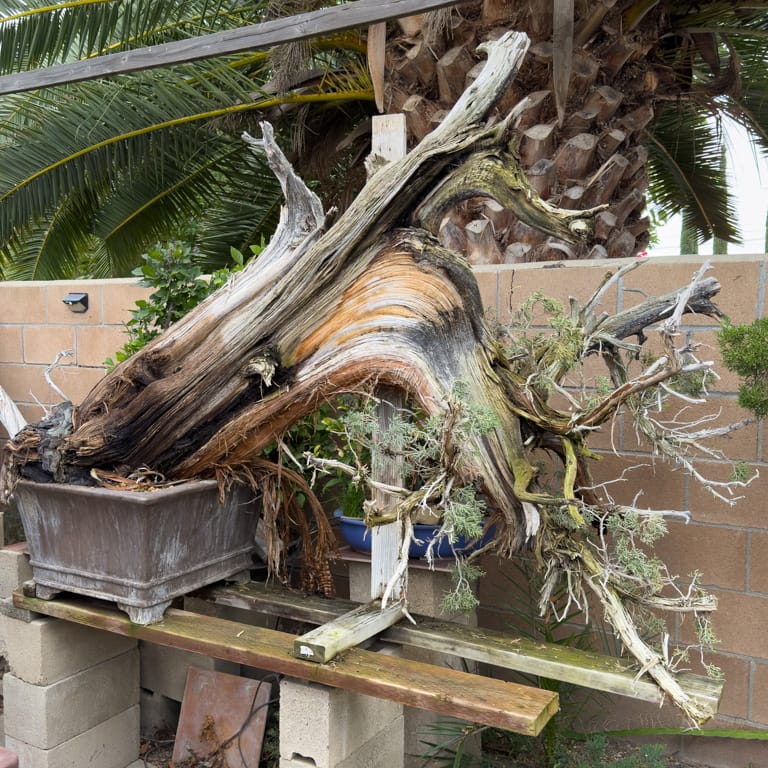
Semi-cascade California juniper
Tom came up with many the techniques he uses on his own. This extends to the way he collects junipers, bends large branches, and works on deadwood. He air layers black pines – even cork barks – regularly, and has perfected a method for grafting pines using candles before they’re fully open. Over time, Tom’s hard work has produced a large number of (large) trees that wouldn’t be bonsai without his vision and novel techniques.
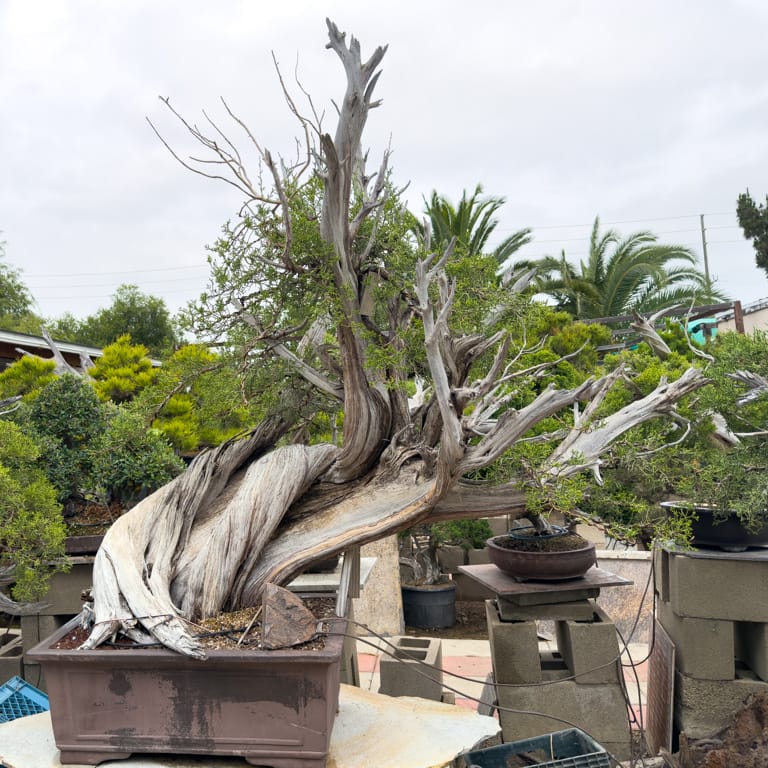
California juniper
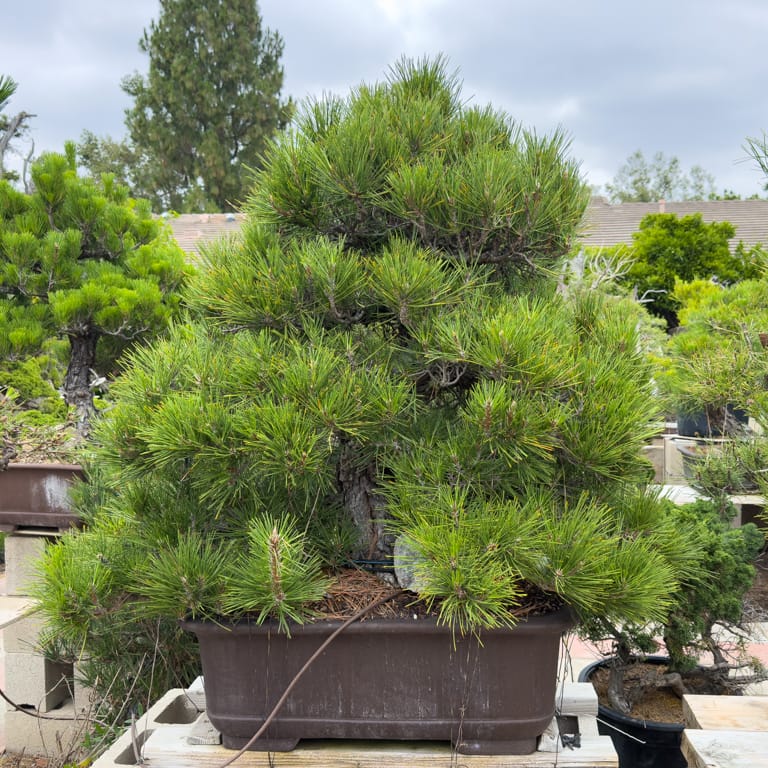
Cork bark pine
Rows of shimpaku with full silhouettes, many grafted over the years, offered contrast to the deadwood-focused designs of the garden’s California junipers.

Shimpaku
The largest of the olives are more than three feet in diameter at the base.
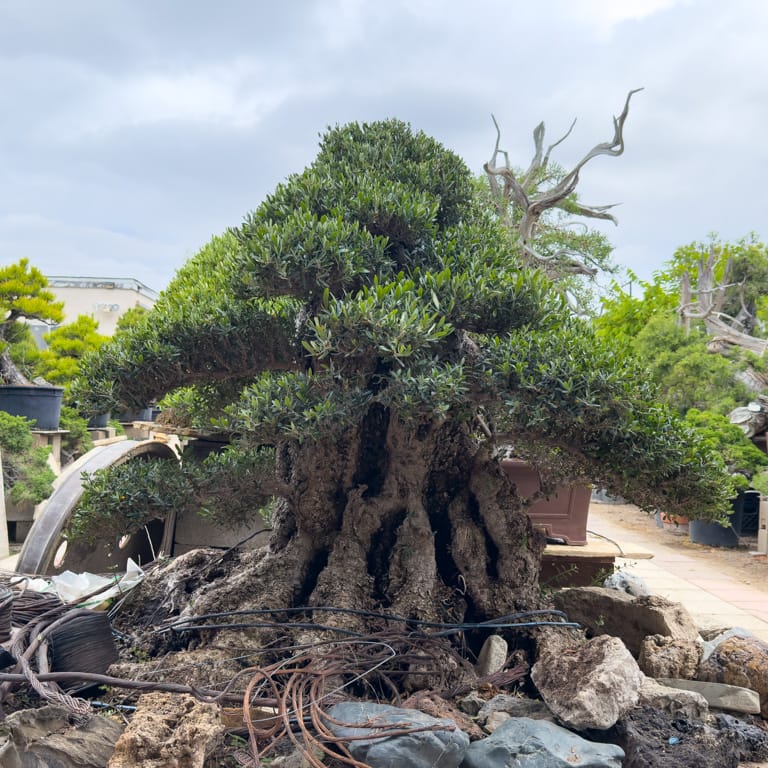
A massive olive
What might look like an average to large-size bonsai in Tom’s garden would stand out as giants in most collections.
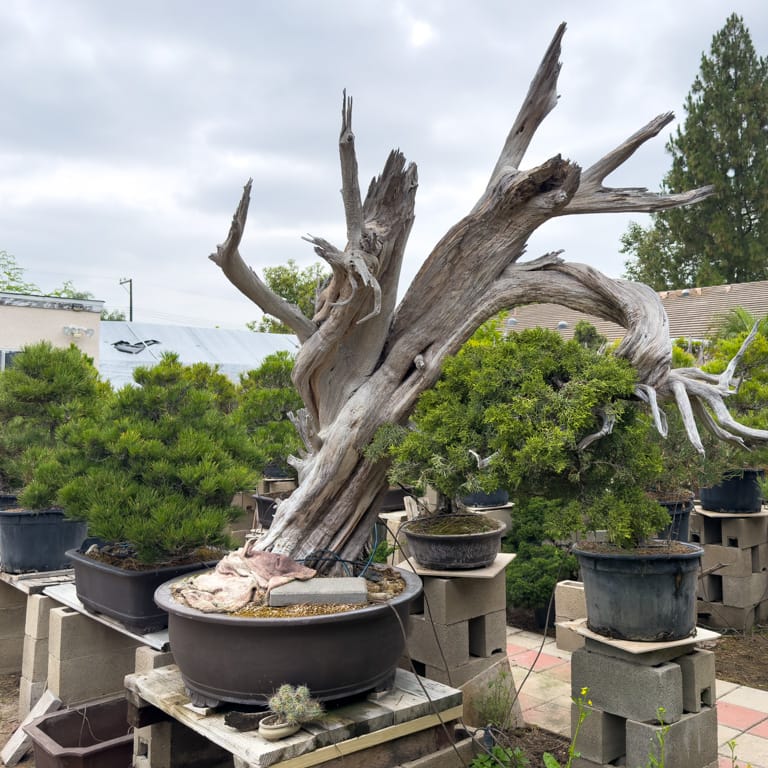
Extra-large California juniper
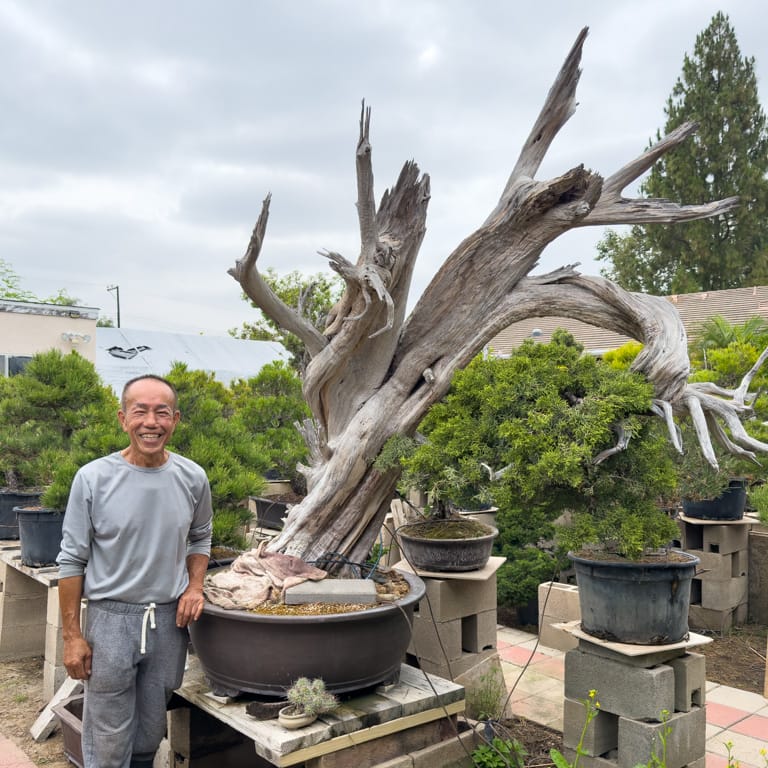
Tom standing next to the tree for scale
That’s right – a number of the trees in Tom’s garden are over six feet tall.
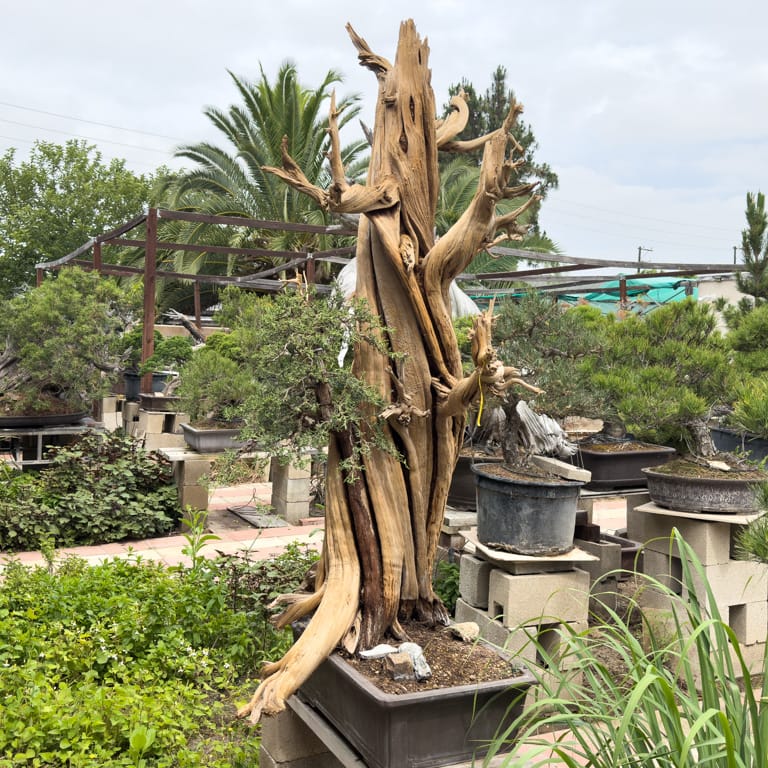
A tall California juniper
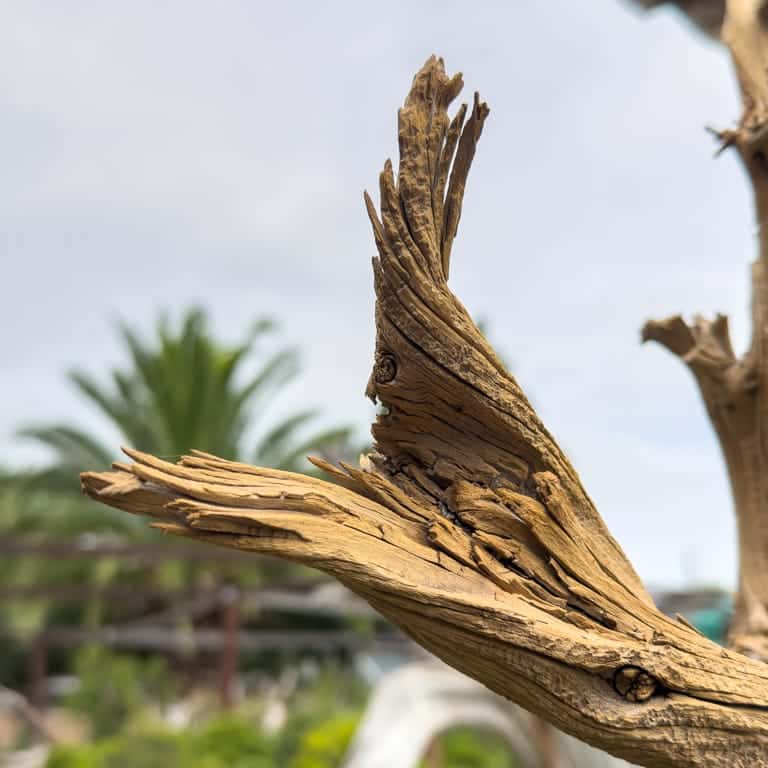
Deadwood detail
While I wandered through his garden, Tom generously answered questions and pointed out examples of whatever we were talking about. He’s a fantastic guy and I highly recommend a visit to his garden if you find yourself looking for dramatic additions to your collection.
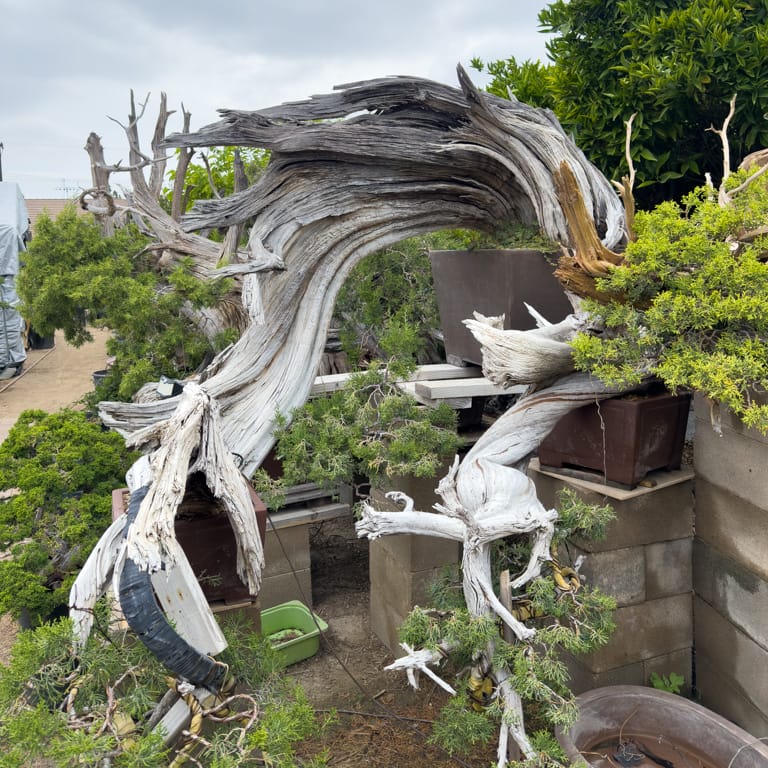
Junipers with ancient deadwood features
Subscribe to Bonsai Tonight
New Posts Delivered Every Tuesday and Friday
Robert Beath says
How does he finance this garden? Does he work alone? Is he able to “show” the work in Bonsai exhibitions locally and world wide?
Jonas Dupuich says
My understanding is that Tom is a bonsai professional who collects or creates from stock plants the bulk of the material in his garden. He’s shown work in local exhibits, but it looks like a significant portion of his contributions goes to private collections.
Venatorscribe says
I can see the talent and work you’ve undertaken, however the final design isn’t my cup of tea. Each to his own. But good you post. I read everything. Cheers Craig
Maria Grissom says
My favorite is the shimpaku
Gary Ostoich says
Jonas
I saw an interview/garden tour on youtube with Tom in which he mentions that he uses a machine to help carry the very large yamadoris- perhaps a simplistic question but do you know what machine he uses? Do you think his method of using candles for grafting could be used in a specific area of a black pine (apex) that just lost most if not all of its needles in that area (but otherwise healthy) through a previous owner being too rough on wiring the delicate branches in that area?
Thanks as always for great posts.
Gary
Jonas Dupuich says
I know he uses a pallet jack to move the big trees – I forget it it’s an electric model. As for the grafting, it’s worth a try, but in general you’ll need healthy foliage past the graft site to ensure there are resources flowing through the area to be grafted.
WAYNE LATEGAN says
Hi Jonas ,
Do you have a little more info on the grafting process of the JBP “using candles before they’re fully open”?
Eg. What time of the growing season and can it be grafted on any branch?
Jonas Dupuich says
I don’t have photos so I’ll have to give it a try next year. My understanding is that it’s done after the candles start elongating but before the new needles fully emerge (just before the green emerges).