I was very impressed by the broadleaf and deciduous bonsai on display at REBS’ recent show. These often difficult to develop and maintain bonsai are in great shape – strong evidence of good bonsai care.
The trees are also evidence that broadleaf bonsai can be powerful.
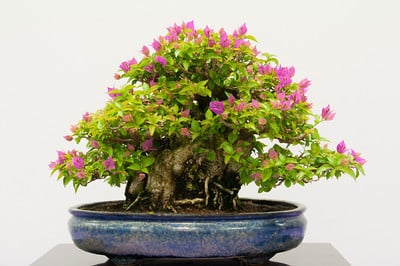
Bougainvillea – about 45 years old
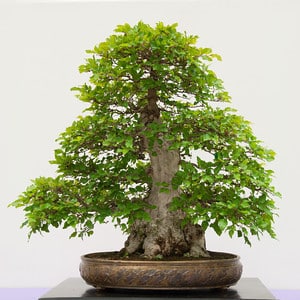
Korean hornbeam – about 73 years old
As it’s getting late in the season, most, but not all, of the deciduous trees were in leaf. A pair of tridents offered a view of each approach.
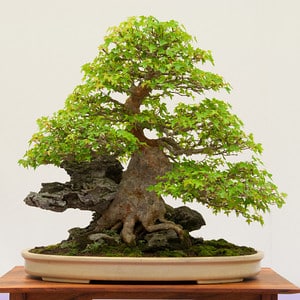
Trident maple – about 82 years old
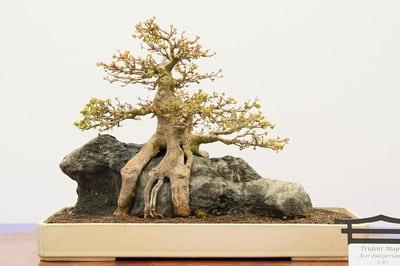
Trident maple – about 35 years old
Other tridents were quite a bit larger.
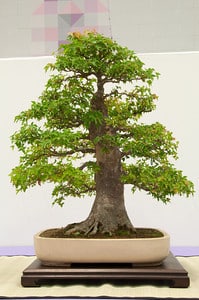
Trident maple – about 80 years old
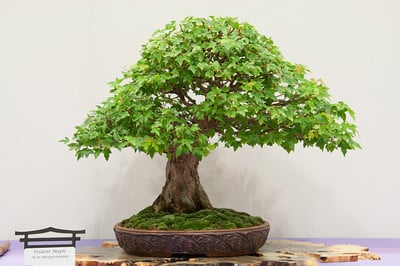
Trident maple
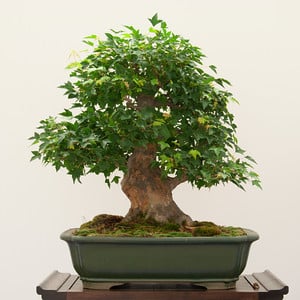
Trident maple – in training since 1980
A pair of live oaks showed two approaches to styling oak.
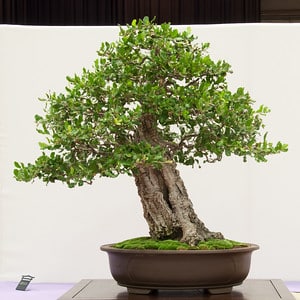
Cork oak – about 30 years old
The oak below was one of my favorite bonsai in the show. The trunk has a good root base, good movement, good taper, and good age.
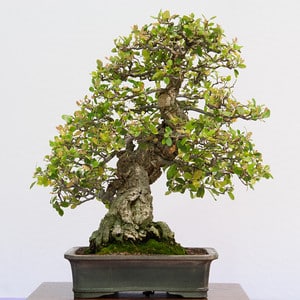
Cork oak – in training since 1966
As always, the show included a good mix of varieties – some common, like satsuki, others less so, like dogwood and pepper. Variety can add a lot to an exhibit, and it can make larger exhibits like this one feel less overwhelming.
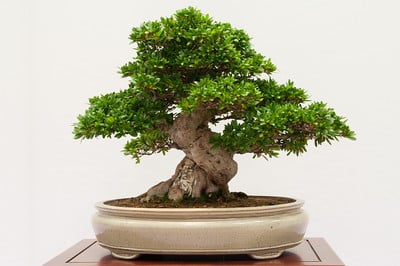
Satsuki azalea – about 37 years old
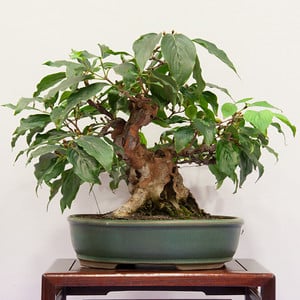
Dogwood ‘Cornelian Cherry’ – in training since 1990
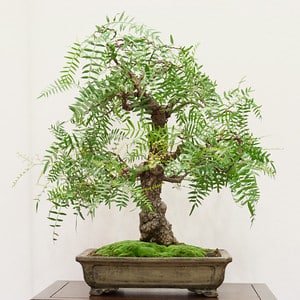
California pepper
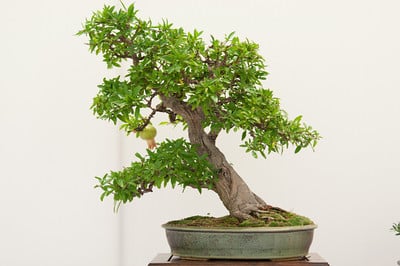
Twisted Pomegranate – in training since 2008
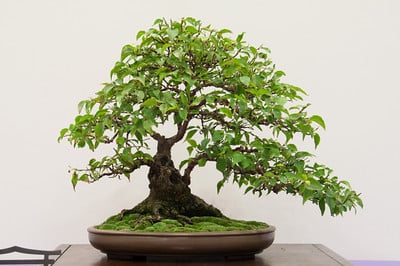
Ume
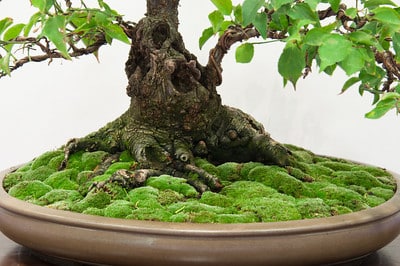
Ume – trunk and moss
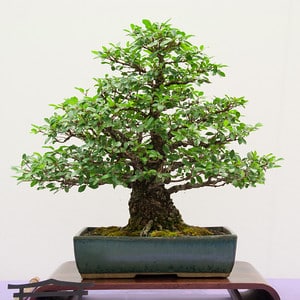
Cork bark elm – about 30 years old
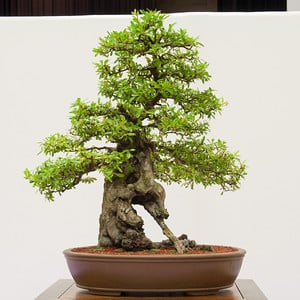
Pryacantha – in training since 1991
Of course, I’m always a sucker for fruiting and flowering bonsai – thanks, REBS, for including these!
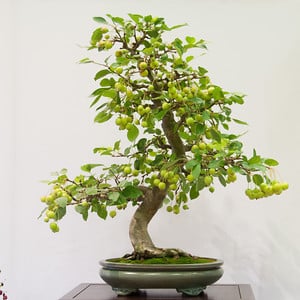
Crabapple – in training since 1998
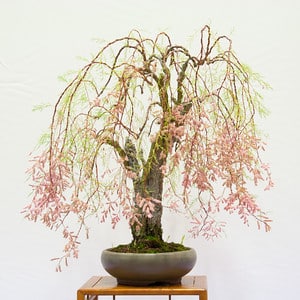
Tamarix – in training since 2012
Subscribe to Bonsai Tonight
New Posts Delivered Every Tuesday and Friday
Alex says
That Trident maple — the sixth tree from the top (3rd Trident) — looks very similar to the Trident maple at the National Bonsai and Penjing Museum in Washington D.C. A picture of the tree on the museum’s website here: http://www.usna.usda.gov/Gardens/collections/VirtualTours/BonsaiVirtualTour_26.html#Slide
Thoughts? ;-D