One of our more educational visits came at the garden of Takeo Kawabe. Kawabe was an automotive engineer whose life took a new direction after seeing, for the first time, the trees in Masahiko Kimura’s garden. Kawabe soon left behind his automotive career and began a bonsai apprenticeship with Kimura at the relatively late age (for Japanese apprentices) of nearly 30 years old. You can see him at work on page 6 of The Bonsai Art of Kimura (upper left-hand corner).
Kawabe’s carving and grafting work is impressive. Together, these skills make him an outstanding creator of bonsai from collected material. His garden reflects this. Although a small number of the trees in his garden are ready for show, the vast majority are in various stages of development. He spoke at length about bonsai development, constantly emphasizing the incremental nature of the work. Maybe one year for carving the deadwood on a tree, another for grafting or repotting, and so on. While it’s possible to do all of this work at the same time, the health of the tree should determine how much work is done at any one time and when the work should be done.
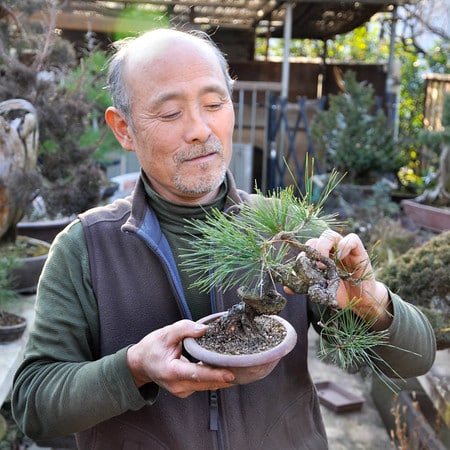
Kawabe with a 15yr. old pine bonsai he’s raised from seed
On the topic of wiring, Kawabe told us there are three reasons for adding wire to a tree: to modify its shape, to cause swelling, and to let light in where it is needed. We are used to wiring trees to get them into shape. We’re typically careful not to let the wires cut into the branches and we remove and replace wire when it gets tight.
This isn’t always the best approach, he told us, when developing trees from scratch. To get a branch to hold its shape, letting the wire cut in and cause swelling can help set a branch more quickly than replacing the wire before it cuts in. The trick is in knowing which branches can benefit from this technique and how much scarring is appropriate for a particular branch.
When existing branches don’t fit into the final design and new buds or grafts are required to improve a tree, wiring can be useful for opening a tree up and letting light into interior spaces where new growth is required.
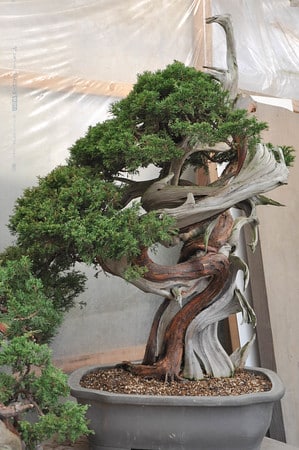
Recently repotted Itioigawa shimpaku
On the topic of carving Kawabe encouraged us to not be too hasty or zealous with our work. While it can be fun and dramatic to do heavy carving with power tools, it’s not always the best approach. Nature, he said, is the best when it comes to carving. Our work is to accelerate the effect nature has on a tree’s deadwood. The best way for us to do this is to work slowly and carefully, and above all, to work with the grain of the wood.
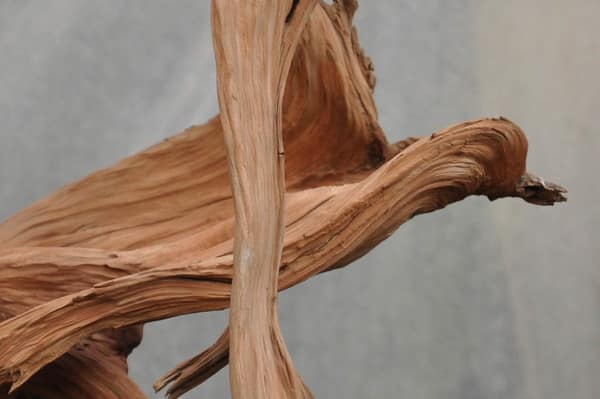
Detail of shimpaku deadwood after initial carving and sandblasting
Walking around Kawabe’s garden is great because it is like getting a preview to a Kokufu Exhibit that will be held 20 years in the future. It’s an opportunity to see where great trees come from and how it is that they come to get there. It’s the kind of garden that motivates one to find as much good material as possible and start working on it.
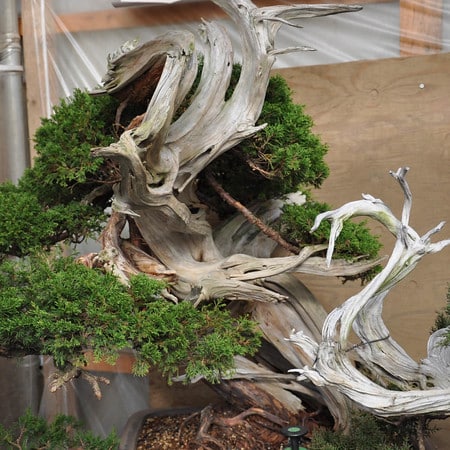
Itiogawa shimpaku
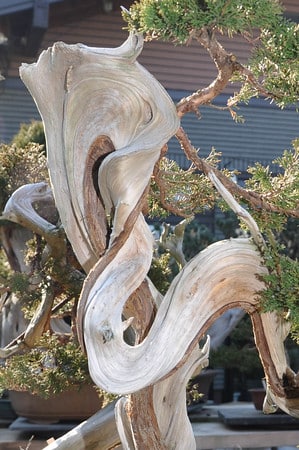
Shimpaku deadwood
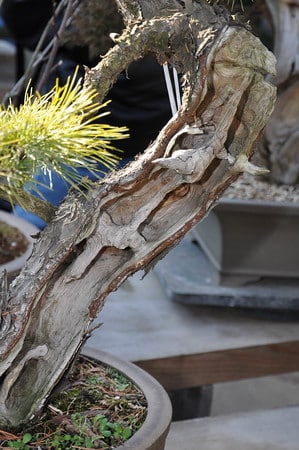
White pine
This large flame-like tree is another long term project. All of the tree’s foliage will grow from a single grafted branch protruding about midway up from the rear left of the tree.
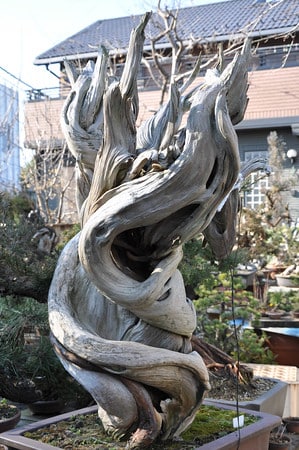
Toho shimpaku
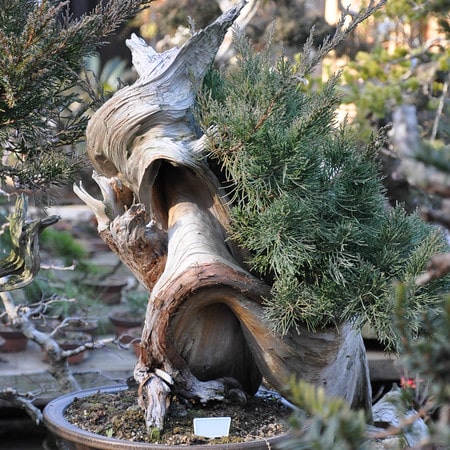
Toho shimpaku
Kawabe also has a sizable collection of Japanese yew bonsai (Taxus cuspidata) that he is hoping to exhibit at an upcoming local event to be held several years from now. Although most will require significant development before they can be shown, there is great potential.
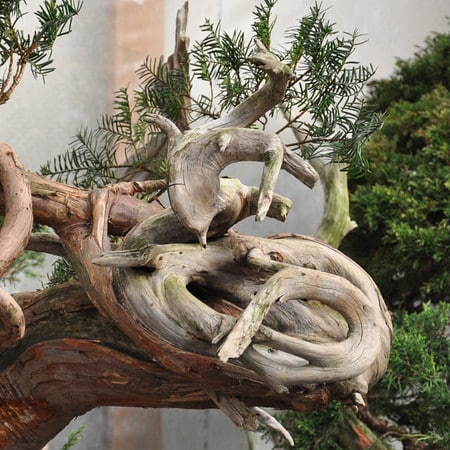
Deadwood detail, Japanese yew
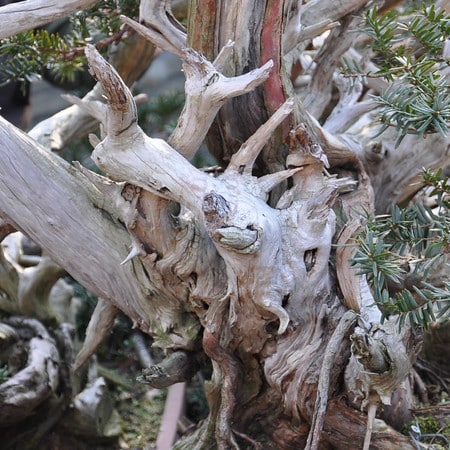
Deadwood detail, Japanese yew
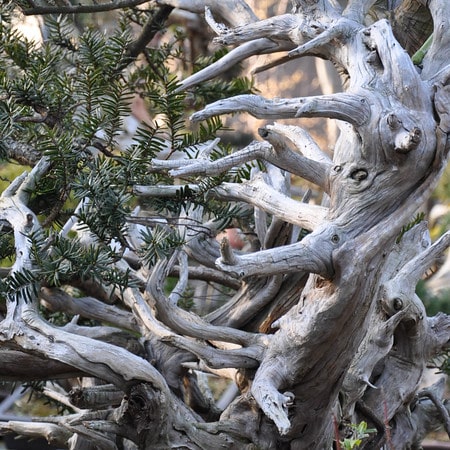
Deadwood detail, Japanese yew
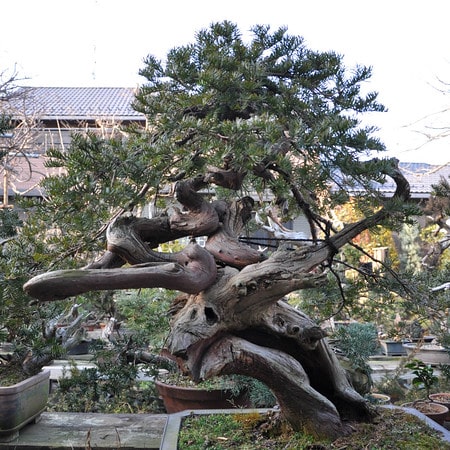
Japanese yew
Subscribe to Bonsai Tonight
New Posts Delivered Every Tuesday and Friday
Dannon says
Just wanted to say that I have realy enjoyed your web site, good photos and good reading. Thanks 🙂
xwires says
@Dannon: thanks for the note – do let me know if you ever have any questions or suggestions.
Kat says
Amazing, Amazing, Amazing! Takeo, your work is STUNNING. Your artwork with the deadood is breathtaking! I’m relatively new to to the world of Bonsai — could you possibly refer me to some good articles on wiring, carving and grafting? Thank you for sharing your work! It is certainly inspiring!
xwires says
Kat – thanks, Kawabe’s work really is something. Bonsai Today #1 is the best guide to wiring that I know of. There are a number of books on grafting, but I don’t know of any that focus on grafting for bonsai. I’d recommend finding a local teacher to help with the grafting and carving as those are even harder to learn from books than wiring is.
Jonas
Kat says
Thank You, Jonas!
Ann Plattner says
Hi, your site is fascinating, and I’m enjoying both the pictures & the conversation. My Japanese maple (which can be seen on my site) was stripped of every branch this past winter. Earlier this spring I duct taped the one remaining branch, which happened to be the biggest brach on the tree. It was holding on with only the bark. I don’t know anything about grafting, & I’m certain duct tape would not be the grafting material of choice, the tree has flourished. The reattached branch has come in fully & the top of the tree has sprouted new leaves. It looks sort of like a poodle w/ a tutu on. Is there a chance that the tape will bind the branch back to the trunk? or is this a short term fix? I look forward to reading more on you site. Thanks, Ann
xwires says
Hi Ann – thanks for the note. It’s hard to tell what’s happening without looking at a photo, but if the branch is alive, there is some connection to the rest of the tree. Over time, the connection may become stronger and the tape will no longer be necessary. If the adhesive is strong, be careful when removing it. I usually leave the tape on for up to a year to allow the union to fuse. Good luck with it!