The Omiya Bonsai Art Museum is a favorite stop of mine on bonsai tours. It provides visitors with a little history about the Omiya Bonsai Village – a collection of historic gardens, several of which are still operating today – and features a courtyard garden with a rotating selection of bonsai.
Most of these trees have been in training for a long time and show a maturity that’s harder to find outside of Japan.
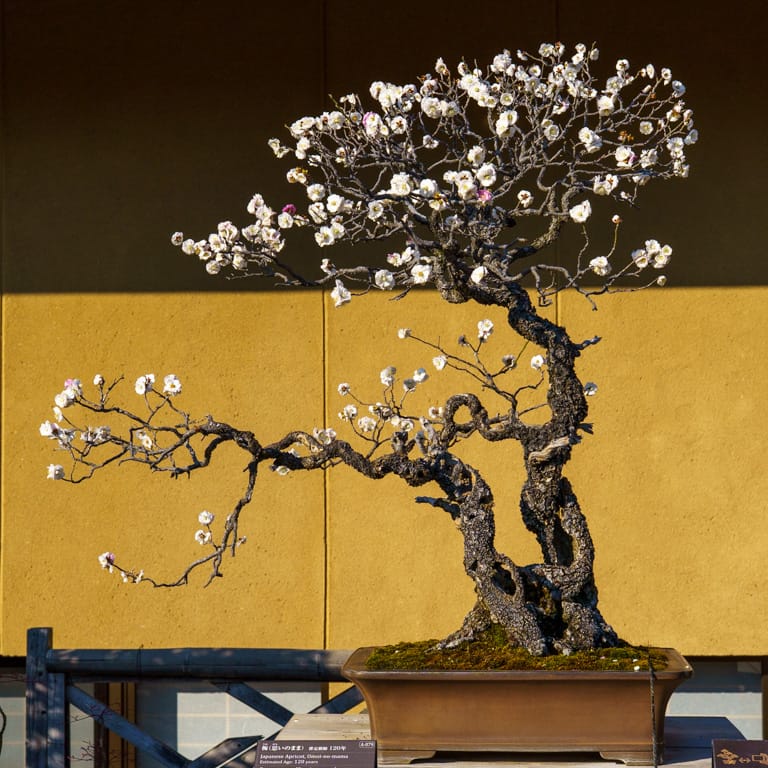
Ume – Omoi-no-mama
Estimated age: 120 years
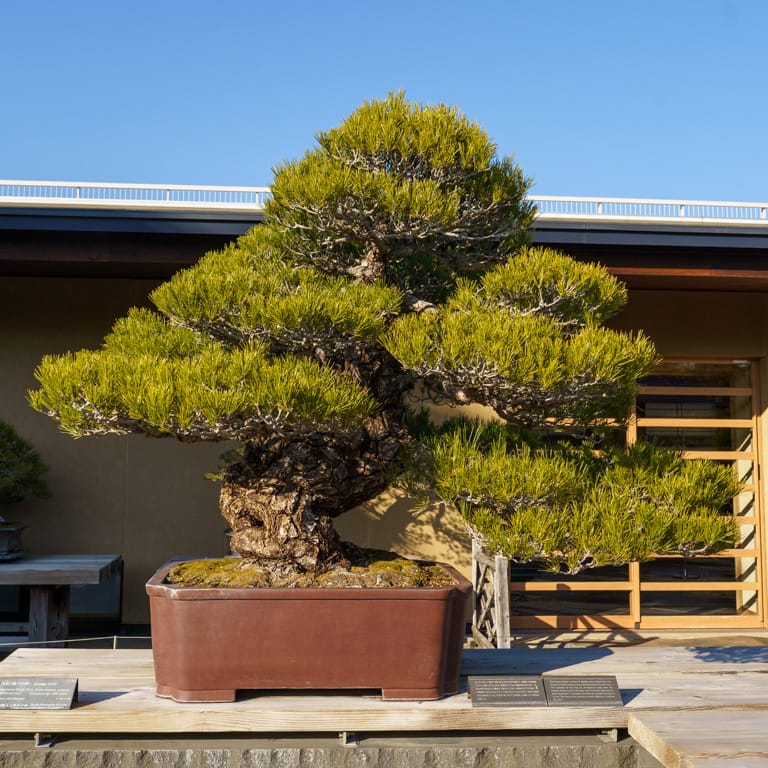
Black pine
Estimated age: 100 years
One reason I come back to the museum so frequently is that there is ample space around every tree. Getting to see great bonsai from all angles is great for studying the trees’ shape and structure.
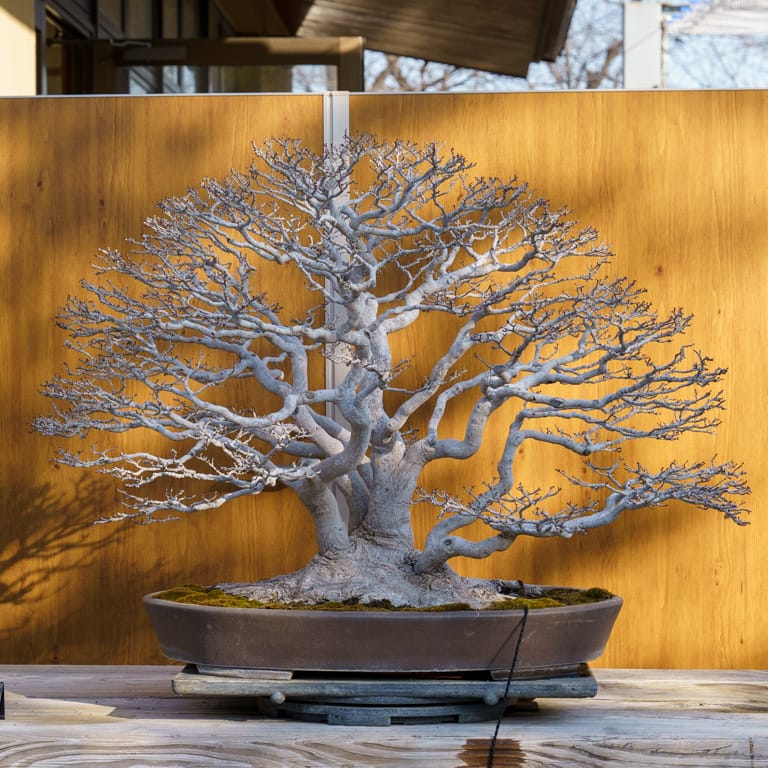
Shishigashira Japanese maple
Estimated age: 120 years
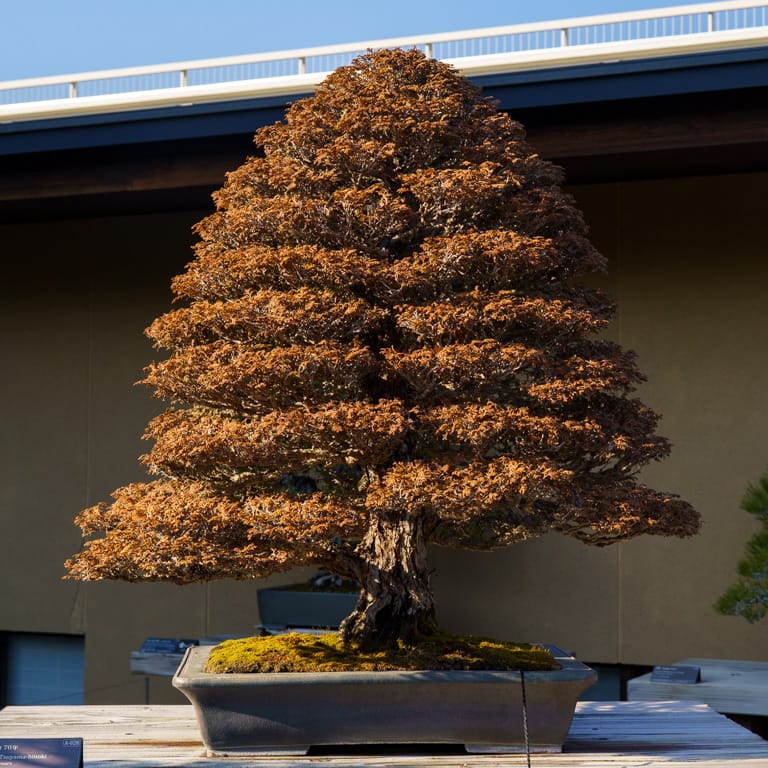
Hinoki
Estimated age: 70 years
The brown foliage on some of the conifers is a response to cold weather. The trees typically green-up when the weather warms in April.
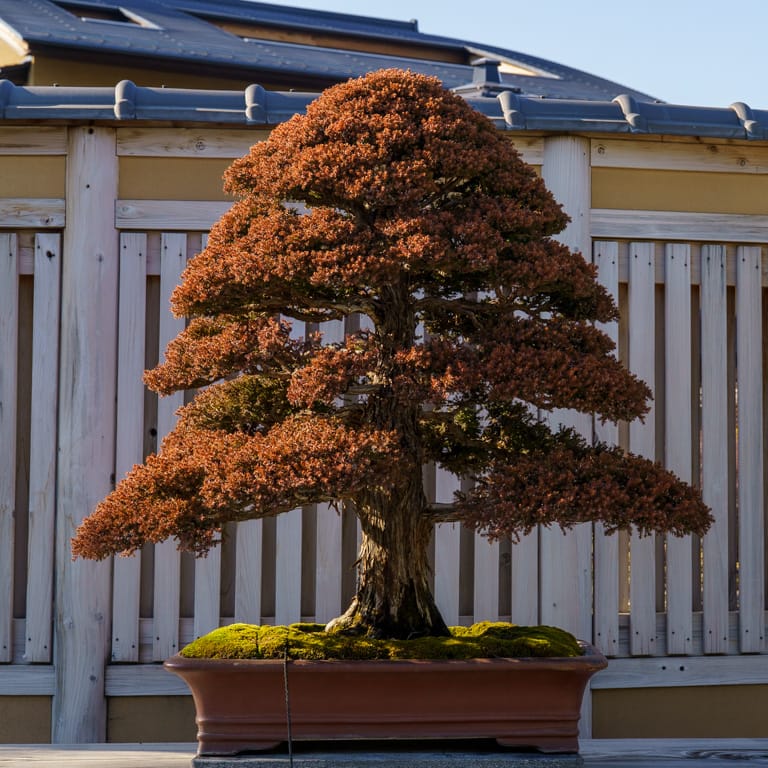
Cryptomeria
Estimated age: 70 years
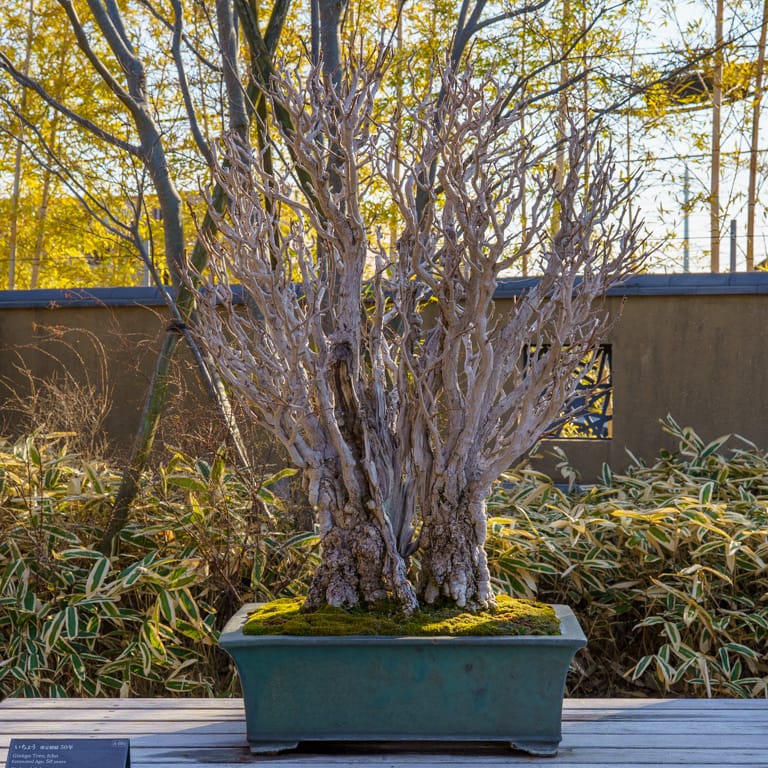
Ginkgo
Estimated age: 50 years
Some trees, like the ginkgo above, look much older than their estimated age suggests. Other trees are much older than we might casually guess.
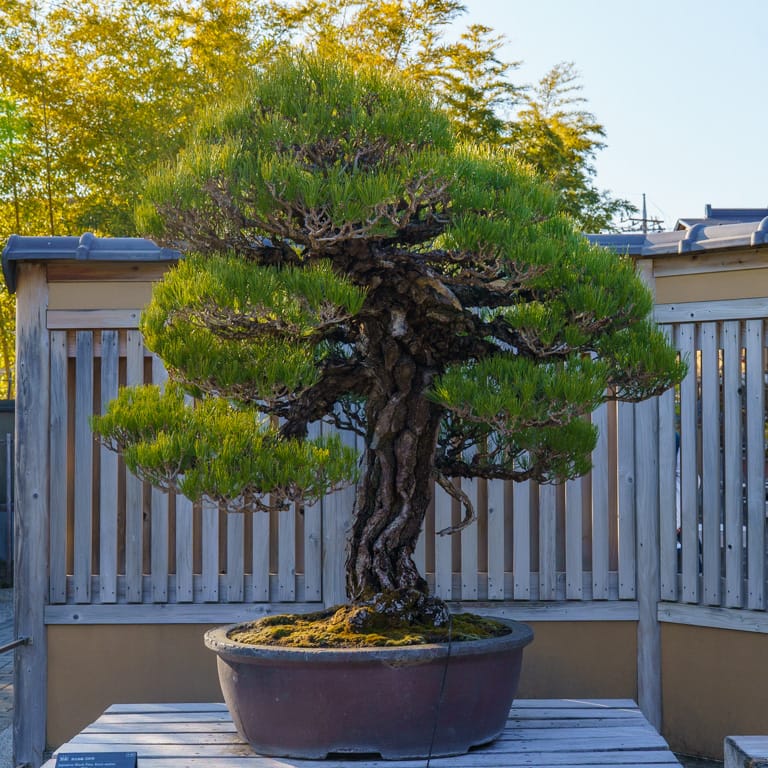
Black pine
Estimated age: 250 years
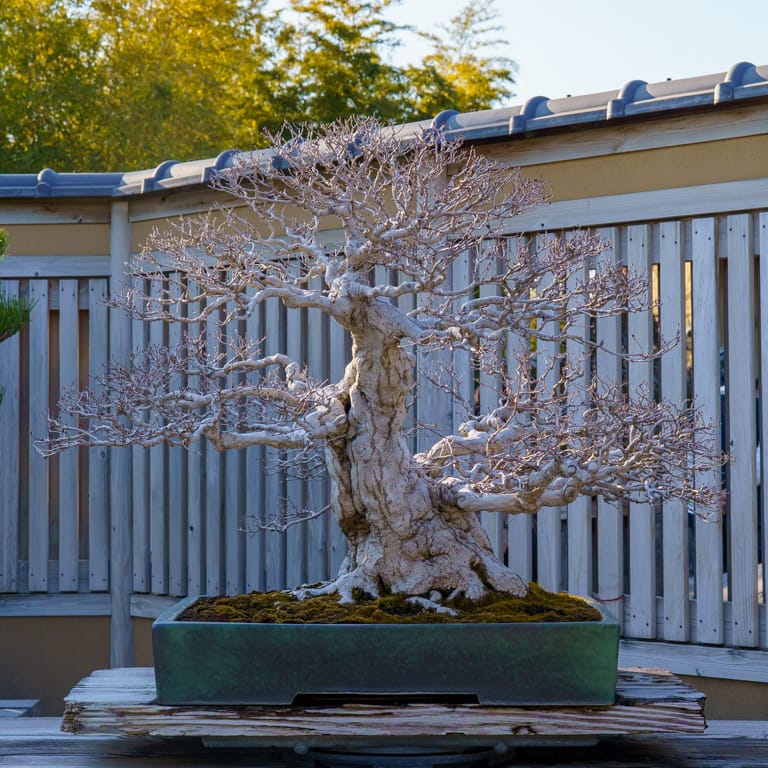
Korean hornbeam
Estimated age: 150 years
More important than age in some cases is the time in training. Each of these bonsai look like they’ve been cared for as bonsai for a long time. This gives them a unique character that distinguishes bonsai from trees found in the natural landscape.
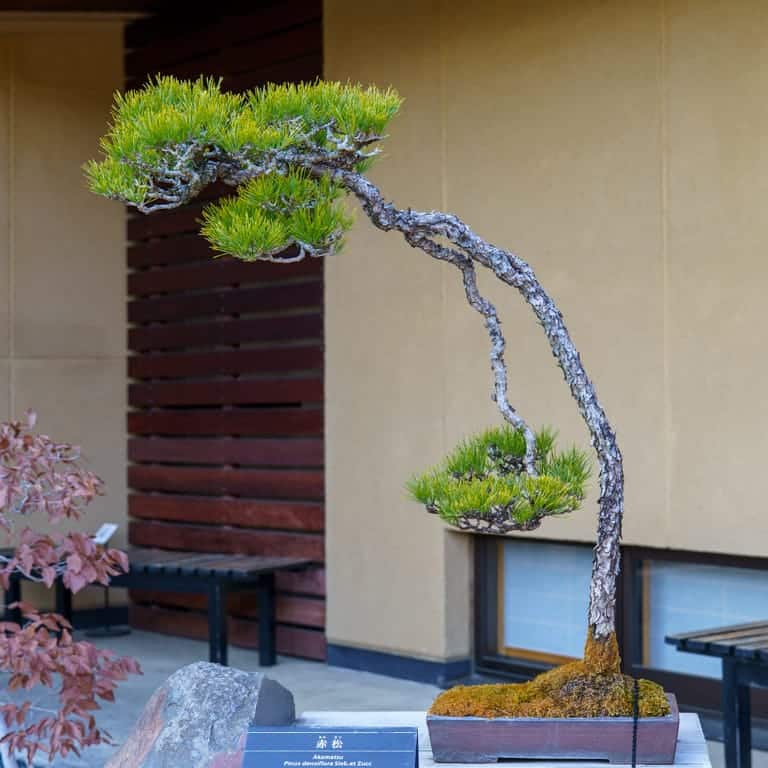
Red pine
Estimated age: (not given – maybe 40)
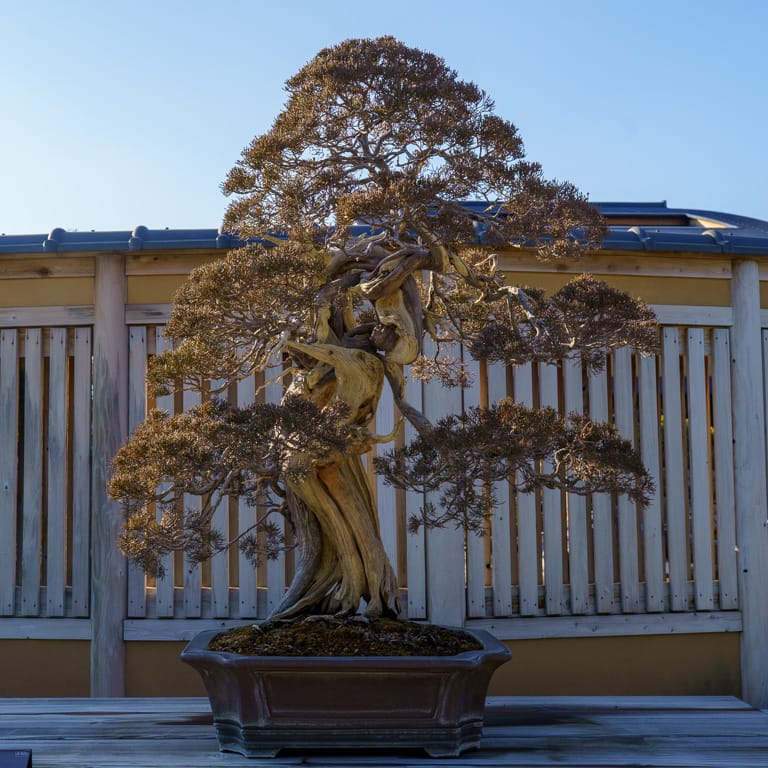
Shimpaku
Estimated age: 380 years
Learn more about the museum or plan your visit at the Omiya Bonsai Museum website.
News & Updates
[Northern California Exhibits]
- The American Bonsai Association, Sacramento, will hold its 66th Annual Exhibit April 11-12 in Sacramento, California. Guest artist Jennifer Price will perform demonstrations at 1:30 p.m. Saturday and Sunday. Club sales and vendor area open both days. Hours 10:00 a.m. – 4:00 p.m. Saturday and Sunday. Learn more at the ABAS website.
- The Kusamura Bonsai Club will hold its 66th Annual Exhibit April 18-19 in Palo Alto, California. Headliner Jennifer Price will perform a demonstration (1:00 p.m. – 3:00 p.m.) Saturday and will lead a critique (at 10:30 a.m.) and workshop (1:00 p.m. – 3:00 p.m., open to public viewing) on Sunday. Tours, benefit drawings, and club sales open both days. Hours 12:00 p.m. – 4:00 p.m. Saturday and 10:00 a.m. – 4:00 p.m. Sunday. Learn more at the Kusamura Bonsai Club website.
- The Bonsai Society of San Francisco will hold their annual bonsai exhibit at the 2026 Northern California Cherry Blossom Festival. The exhibit will be held in the Issei Memorial Hall on Saturday, April 18, from 11:00 a.m. – 4:00 p.m. Learn more at the Cherry Blossom Festival website.
[Regional Events]
- The MidAtlantic Bonsai Societies are hosting their Spring Festival on April 17-19 in Harrisburg, Pennsylvania. I’ll be presenting and leading workshops together with special guests Kaya Mooney and Peter Warren throughout the weekend. Learn more at MidAtlanticbonsai.org.
Subscribe to Bonsai Tonight
New Posts Delivered Every Tuesday and Friday
Jeff James says
The foliage on the Hinoki, Cryptomeria, and Shimpaku all look dark and reddish. Is the color in the photos accurate?
Jonas Dupuich says
Yes, that’s pretty much the way they looked in the garden. The sun was getting low so that could’ve added some color to the foliage.