Last weekend I had the opportunity to judge the Minnesota Bonsai Society’s annual show held at the state fair. An amazing crowd of 225,000 people attended the fair that day, and many of them lined up to see the bonsai on display, a club tradition dating back to 1975.
For those who are curious about the process, I’ll provide an overview of how I judge events like this. If you’d prefer to jump straight to the photos, just scroll down a bit past the text. (Thanks to Matt Spinniken for suggesting the topic!)
The Minnesota Bonsai Society asked me to provide scores for every tree in the exhibit and provide pointers about what the owners could do to strengthen their displays. This formed the basis of a critique that allowed members to ask questions to help them better understand bonsai conventions and learn tangible ways to improve their trees.
Scoring every tree in an exhibit is a good way to get an overall view of which trees stand out within their categories. This isn’t always tenable for large exhibits (like the US National Exhibition). When there’s no time to evaluate all of the trees in an exhibition you can simply take note of the trees that stand out to you and work from that list as you determine the award winners.
The core work of bonsai evaluation requires closely examining a tree to better understand its good and bad points – the same work, incidentally, that we do when we’re shopping for bonsai.
One framework for doing this is to consider the traits inherent to the species. This might mean looking for pines that have aged bark, maples with fine branching, and junipers with interesting deadwood and movement. (See Conifers vs. deciduous bonsai: evaluating different species for details.)
Another approach is to think about the tree and the work done with it separately. For the state fair show, I considered the characteristics that the artist may have started with (for example, the trunk and surface roots) separately from the contributions of the artist (such as selecting a front and creating an effective branch design for the tree). Great trunks are wonderful on their own, but when the artist works for years to develop an attractive silhouette that complements the trunk perfectly, bonsai can become far more compelling than when they’re first styled.
A final set of criteria applies to how well trees are displayed and prepared for exhibit. This is when you can consider tree health, top soil treatment and/or moss work, containers, accents, and any other display elements. When I talked about evaluating exhibits with UK artist Corin Tomlinson he made a great observation that relates to this. He said that he may score a tree lower when simply putting a short amount of time (as little as 15-45 minutes) would make a tree or display significantly better.
This could mean cleaning and oiling the pot, but making sure it’s not too oily. It can mean looking out for moss ahead of the event so when the time comes you have a good supply of it on hand to cover the surface of the soil. It can mean weeding the pot (and accent) and trimming any new shoots to make sure the tree has the silhouette you have planned for it. It definitely means setting wired branches, if any, and removing any brown leaves or needles.
Because these tasks require more time than skill or money, it’s possible for just about all of us to complete them. And when everyone chips in and does this work, it can be the difference between another typical show and an exhibit to remember.
The above covers the basics of how to judge a show. If you’re curious about what a more detailed approach might look like, check out the Judging Rubric from the 2015 Artisans Cup and “Judge and Jury” from the Mirai Lecture Series (requires subscription). Both are great guides to the topic that help you create more compelling bonsai and bonsai displays.
Now for the trees! Here are some highlights from the 2024 Minnesota Bonsai Society’s Annual State Fair Show.
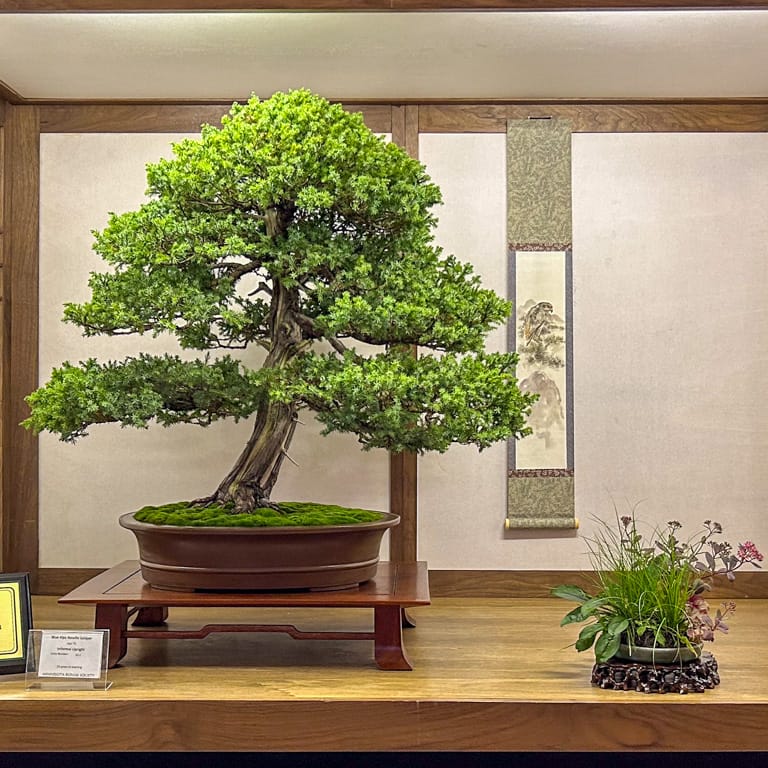
Blue Alps juniper
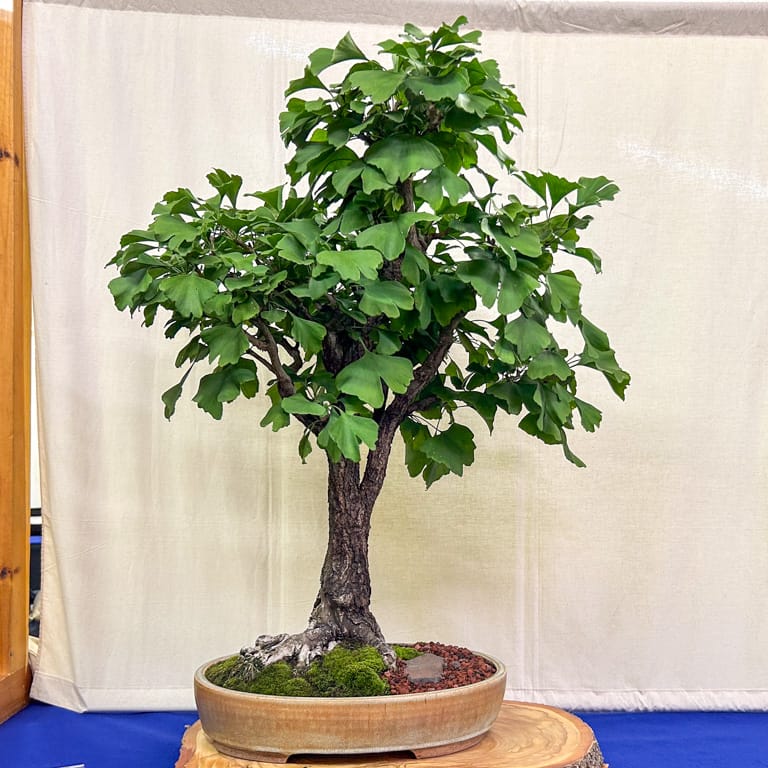
Ginkgo
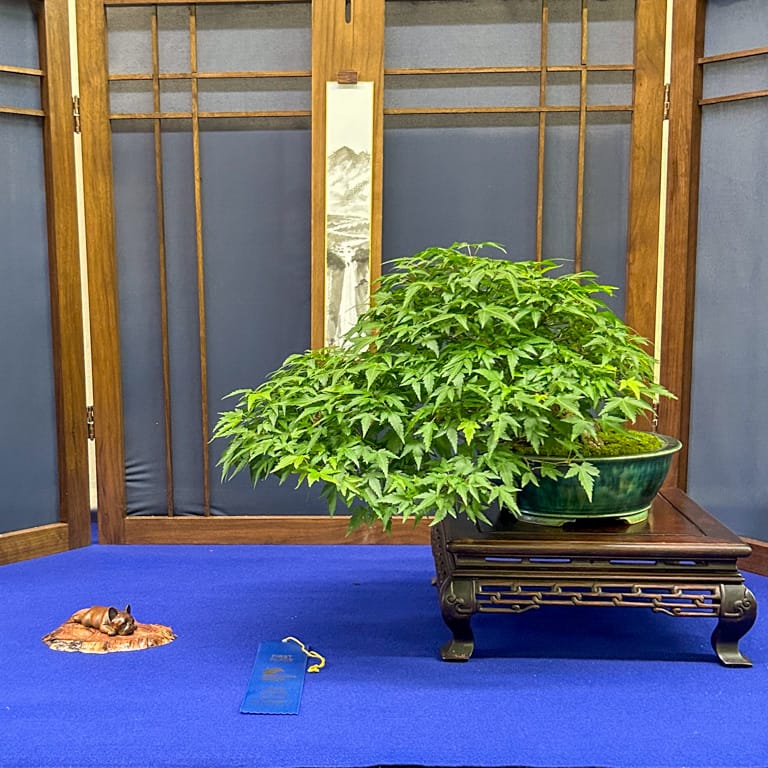
Kashima Japanese maple
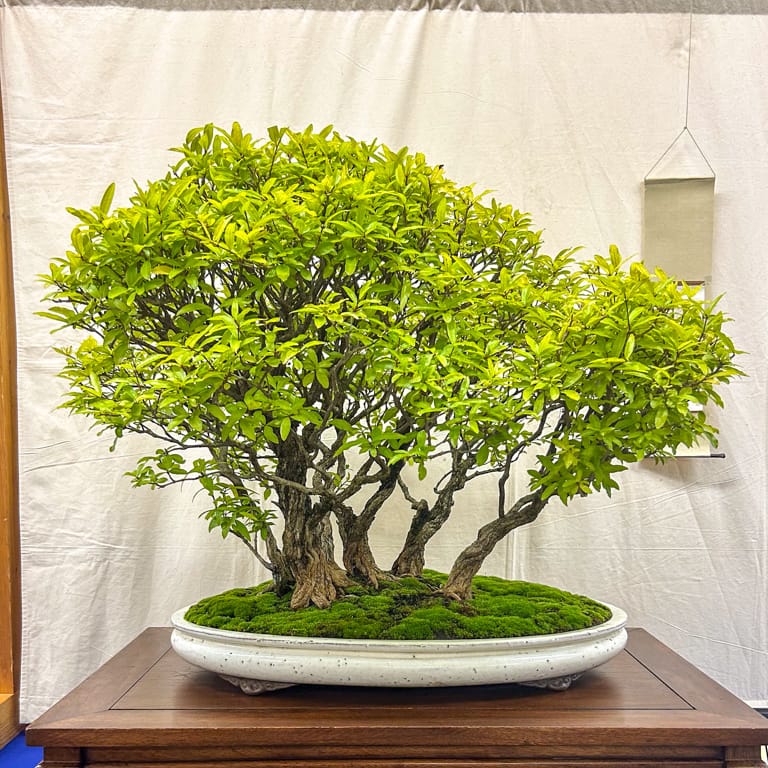
Pomegranate
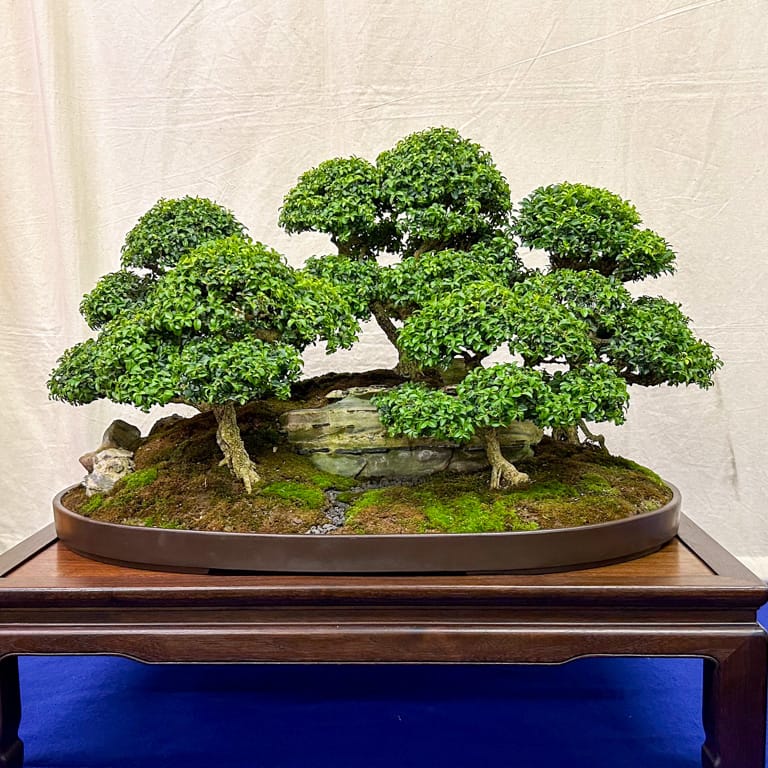
Kingsville boxwood
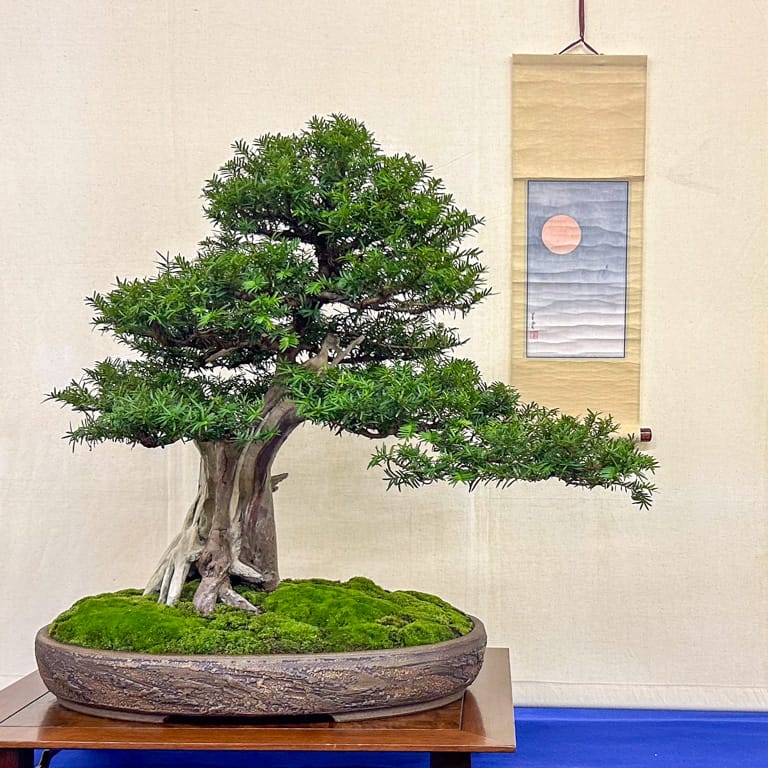
Yew
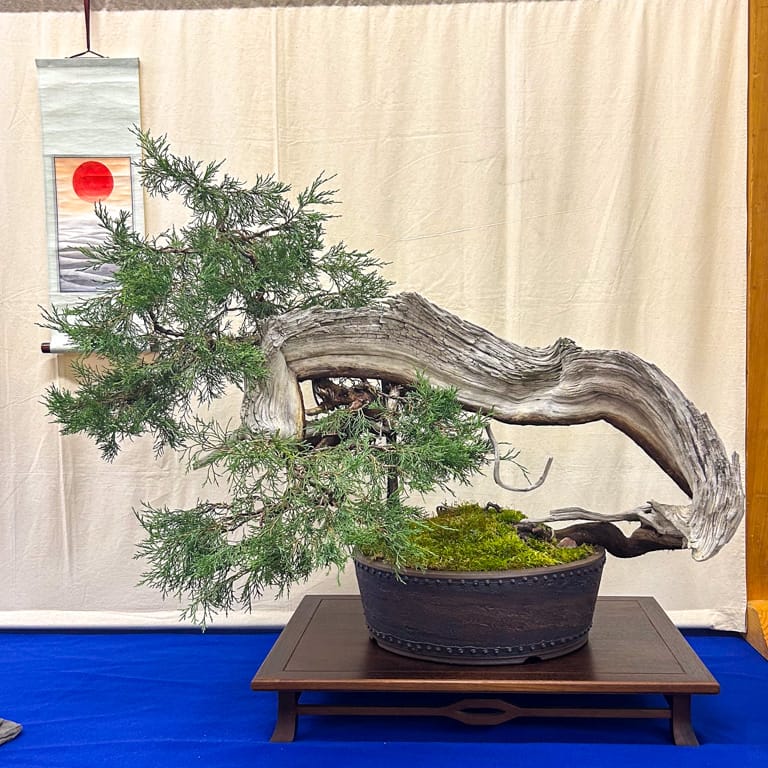
Rocky Mountain juniper
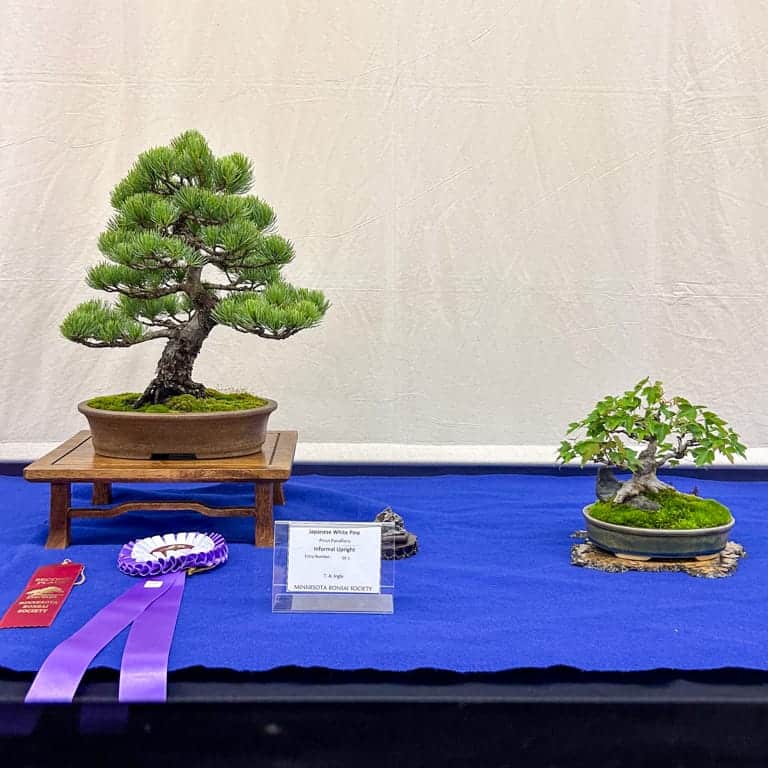
White pine and trident maple
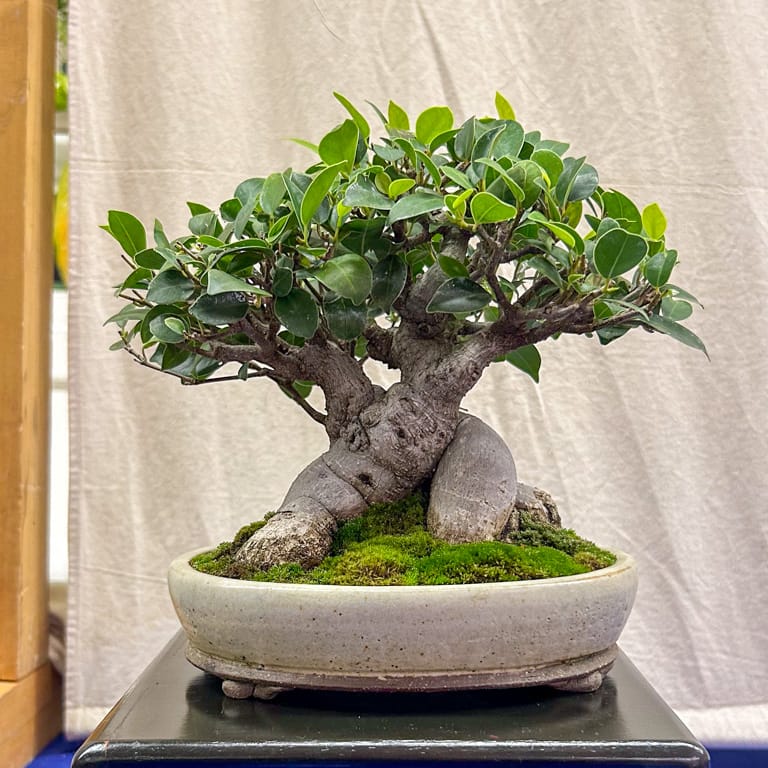
Ficus
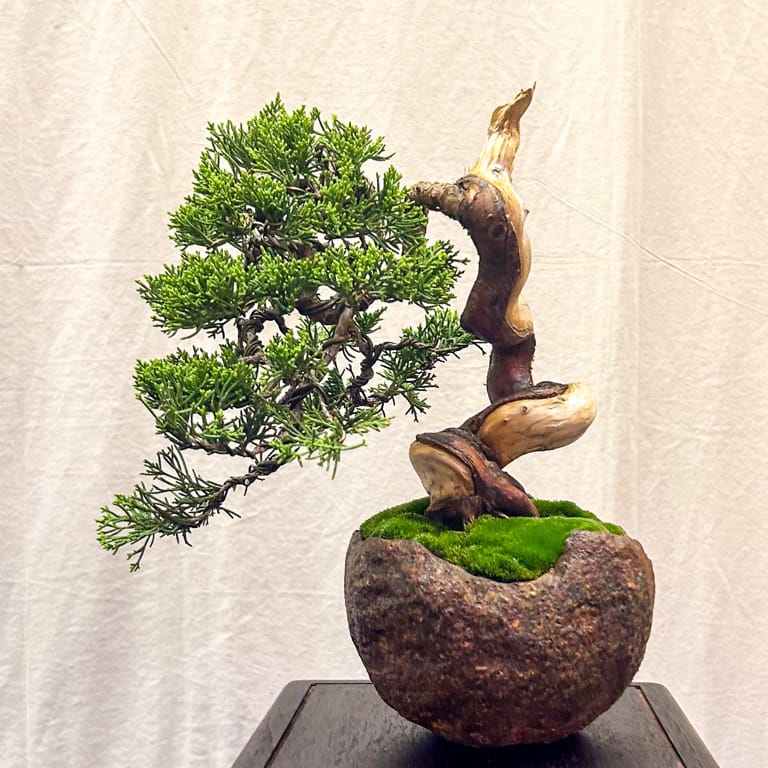
Itoigawa shimpaku
News & Updates
The Pacific Bonsai Expo is just seven weeks away! Now’s the time to get your tickets or sign up to be a volunteer. We have lots of volunteer opportunities available, and if you pick up two shifts on Saturday or Sunday, you’ll get free admission to the show for the day.
No experience is needed to be a volunteer. For our first show we had over 100 volunteers from all over the country. Unlike other non-profit bonsai organizations, we don’t have members who can volunteer to help things run smoothly. As an attendee, exhibitor, or supporter of the event, you can help us provide visitors with a world-class experience and ensure that we can host future Expos by signing up to be a volunteer today!
Subscribe to Bonsai Tonight
New Posts Delivered Every Tuesday and Friday
Leigh Blake says
Thank you…I appreciate the “traditions” that go into the idea of a “perfect” bonsai…but having turned “rebel” over thirty years ago, and trying to emulate NATURE as closely as I can, I find the idea behind a traditionally perfect and JUDGED tree does not create ART…merely a superficial “idea” of what judges look for. This is NOT art… The Pomegranate forest and the Itiogawa Shimpaku were the most artistic…as photographed..But thank you anyway..
Jonas Dupuich says
Hi Leigh – thanks for the note! One thing I like about judging and critiques is that they offer opportunities to recognize the different goals people have for their trees. This allows artists to pursue nature, convention, or any other direction of their choosing while giving judges the opportunity to weigh how well a given tree represents the approach the artist has taken with it.
I admire the work that went into the pomegranate and the itoigawa and recognized both trees with awards.
Thanks, Leigh!