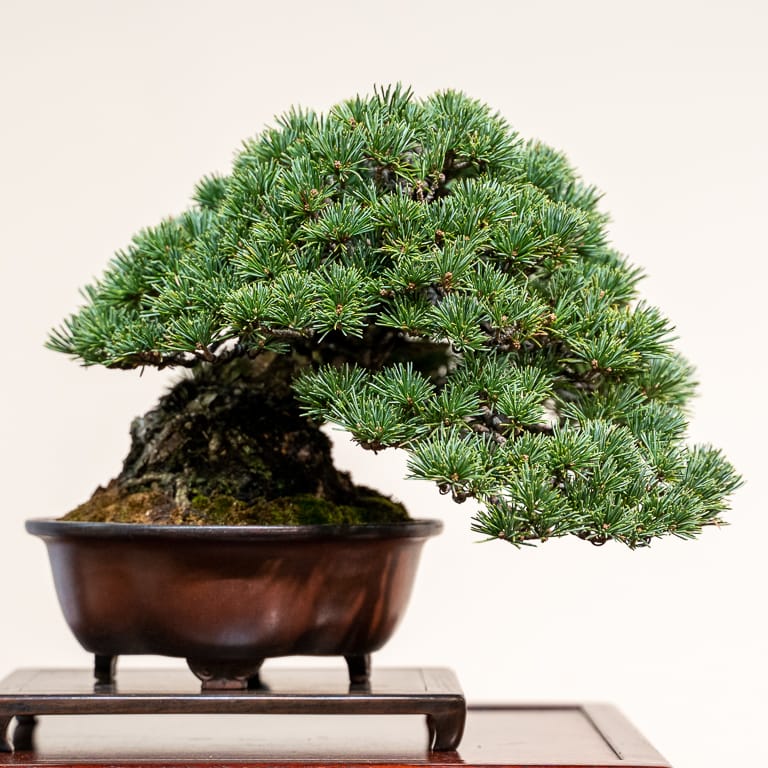
Today I’d like to share a single tip for styling shohin bonsai – focus on branch density. As you look at photos of shohin displayed at this year’s Kokufu exhibit, you’ll notice that all of the trees are full. There’s a good reason for this. Because the trees are displayed in groups, it makes sense […]
Kokufu
Kokufu 101: conifers
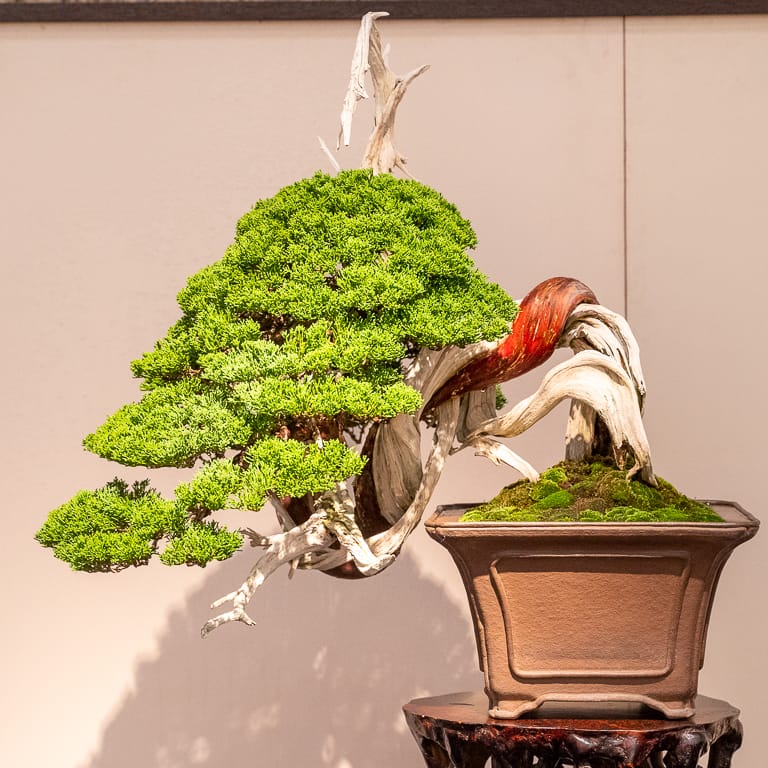
You can often tell the species of a tree by its shape. The tree below could be one of three different species – needle juniper, cryptomeria, or hinoki cypress. Looking closer at the foliage,we can see this is a hinoki, a species that’s commonly styled as formal upright bonsai with highly refined branch pads. Formal […]
Kokufu 101: deciduous bonsai
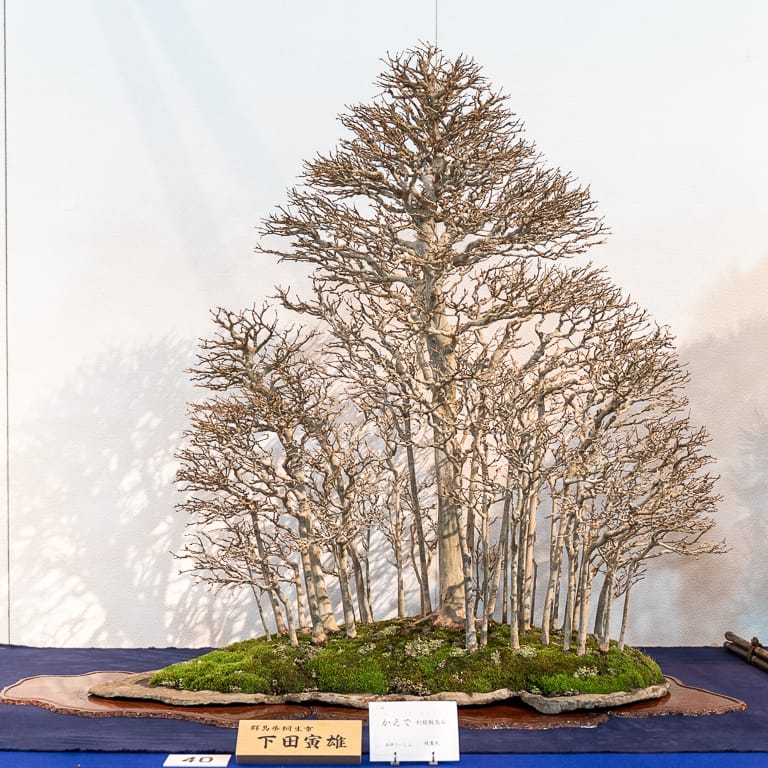
When designing deciduous bonsai, one of the biggest decisions is how to form the branches. Some of the key considerations are the angle at which the branches emerge from the trunk (do they go up, down, or out), the basic movement (curvy or straight), and the silhouette or outline (pointy or round) of the tree. […]
Kokufu 101: Japanese black pine
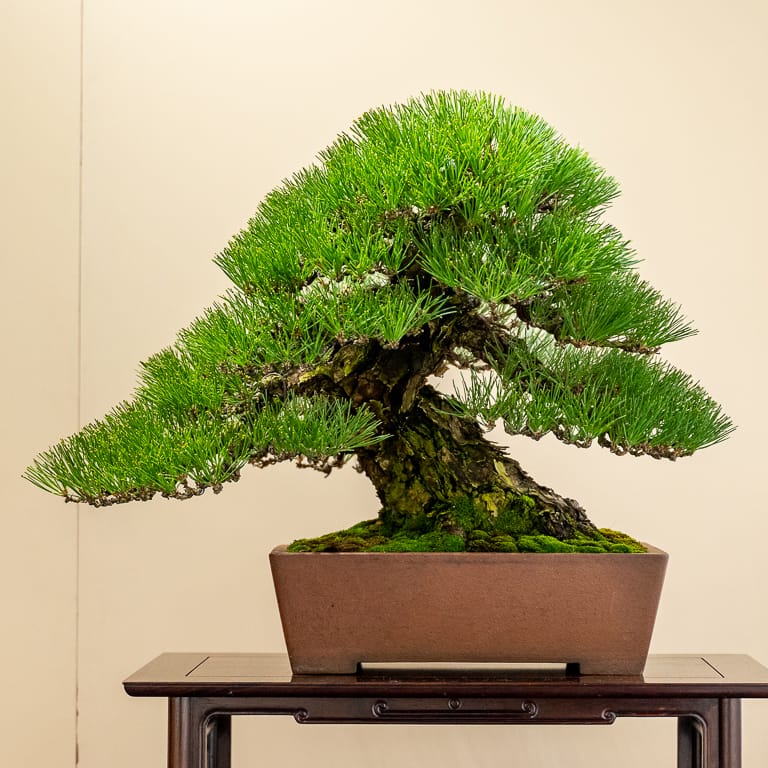
One of the most valuable aspects of a visit to the Kokufu exhibit is the opportunity to study great trees in person. Just looking at a handful of pines, for example, can reveal very different approaches to creating branch structures and silhouettes. Let’s start by looking at four medium-size trees. The first tree has very […]
Accents displayed at the 94th Kokufu-ten
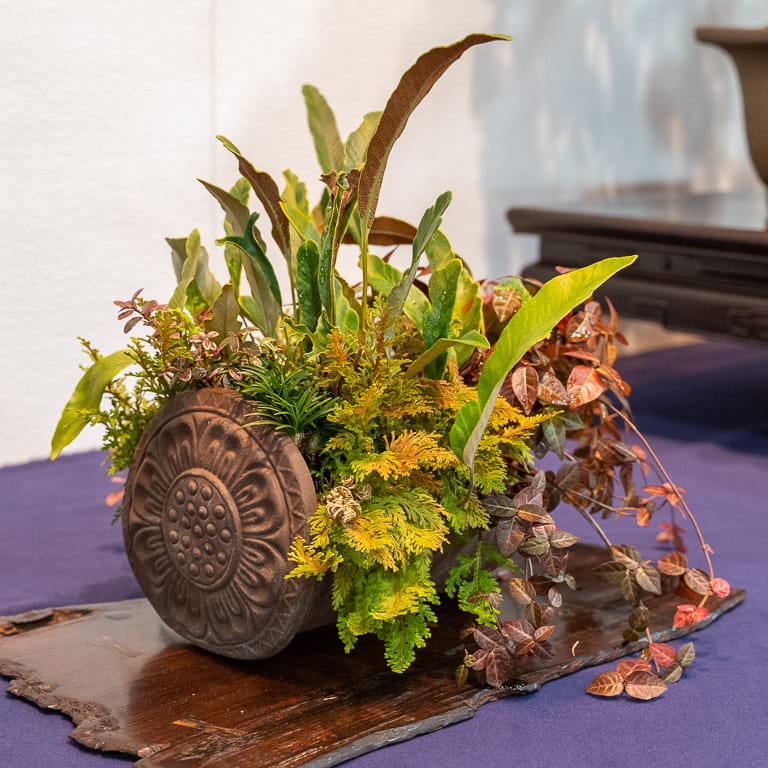
If you look next to every great tree at the Kokufu bonsai exhibit, you’ll find a small companion plant at its side. Korean hornbeam display Accent plants, or shitakusa (“under weeds”) as they are known in Japanese, accompany every display at the Kokufu-ten. Accents can feature one or more species, and they are typically planted […]