Mountain Hemlock
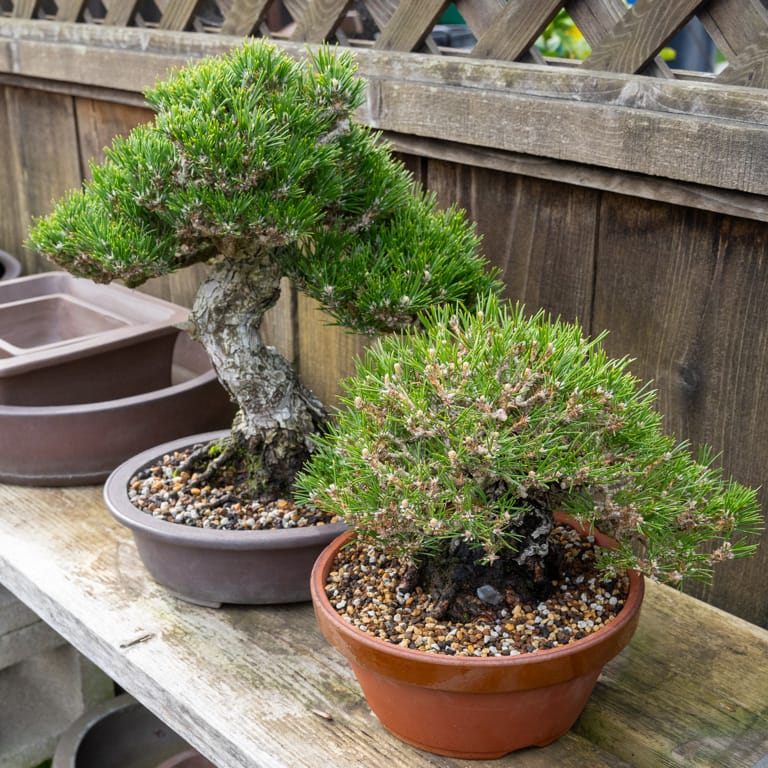
I recently added a new tree to my collection – a mountain hemlock. I haven’t worked with the variety before so I have a lot of learning ahead of me.
Mountain hemlock – Tsuga mertensiana
My first goal for the tree is to develop a healthy root base. To do this, I will bare root half of the tree and introduce the exposed roots to bonsai soil. I start the repotting by searching for the surface roots.
Hemlock – out of the pot
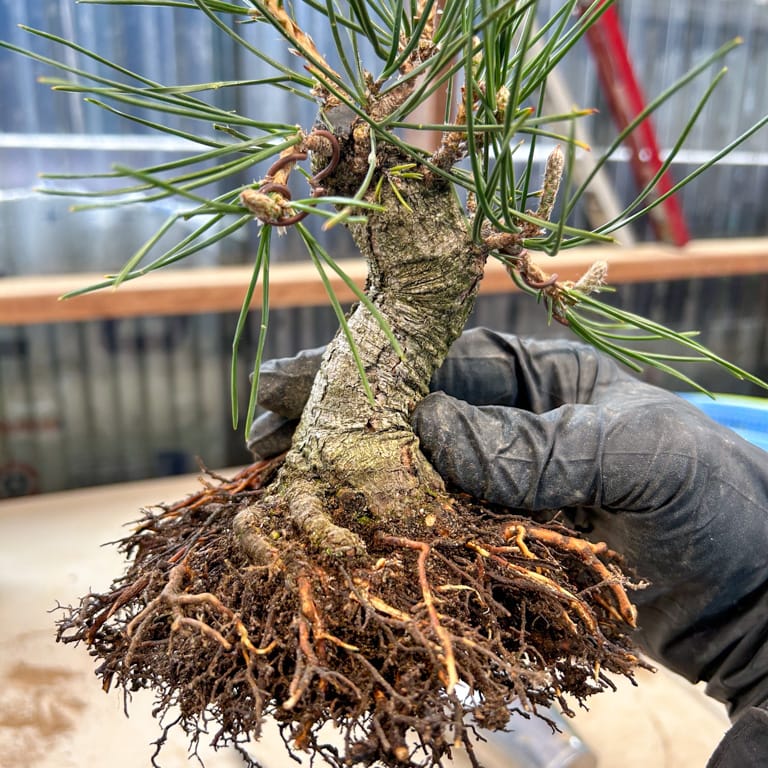
I’m in luck – large surface roots are sitting just below the soil line. The roots aren’t perfect, but they are healthy and plentiful.
Surface roots
After locating the surface roots, I removed all of the soil from the front half of the rootball. As I worked, I found two large roots that had been cut and since healed over.
Root callus
To encourage new root development, I cut away the callus on one of the roots. I’ll do the same for the other root the next time I repot.
Callus removed
As there were no large roots, I was able to fit the tree into a large bonsai pot. Here’s how I prepared the wires.
Pot ready to go
The tree’s large surface roots made tying the tree into the pot a breeze. Here you can see I protected the root with an automotive belt – a chopstick kept the wire from sliding closer to the trunk.
Automotive belt protects the root
Seeing the tree in a bonsai pot made me excited about the tree’s future – especially the deadwood near the base of the trunk.
Hemlock – repotting complete
Although the deadwood here is somewhat unusual, the formation is not uncommon among hemlock bonsai.
Deadwood near the trunk
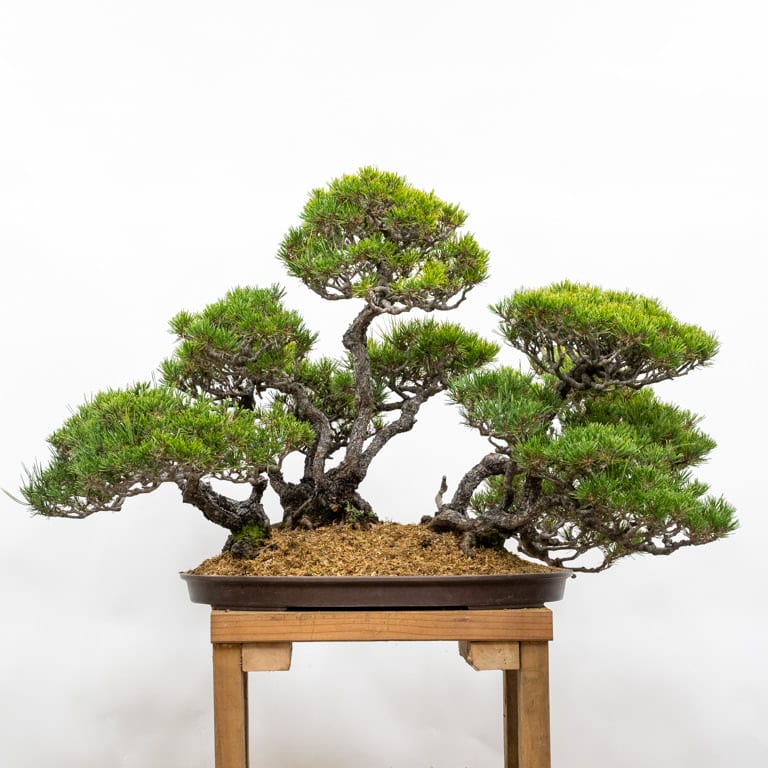
From what I can tell, hemlock bonsai is becoming more popular these days. I hope so – I think it’s an attractive variety. For more hemlock fun, check out Michael Hagedorn’s intriguingly titled post, “Mountain Hemlock on Levitated Nylon Board.“
How to wire a bonsai pot
In preparation for repotting season, Boon brought several pots to January’s Bay Island Bonsai meeting that exemplified the proper way to prepare pots for repotting. The technique differ slightly for pots with one, two, three or four drainage holes. First cover drainage holes with screen to keep soil in and insects out. The examples below feature “Z” clips – “C” clips may be used for small drainage holes (see “Repotting a Trident Maple” for an explanation of the “Z” clip). Tie-down wires are then measured and fitted into place. For round pots, measure out a length equal to the circumference of the pot. For rectangular pots, measure out a length equal to two long sides of the pot and one short side (two lengths and a width). You can make adjustments based on the placement of the drainage holes and the depth of the pot – for example, use longer lengths for deeper pots. For pots with a single drainage hole, secure tie-down wires to a “little-man” clip (the clip resembles an armless stick-figure).
One-hole pot from above
One-hole pot from below
For pots with two drainage holes, situate the wires at the inside edge of each hole. This lets us use as little wire as possible and prevents the screen from moving when we tighten the wire.
Two-hole pot from above
Two-hole pot from below
The preparation for three-hole pots is similar to the process for two-hole pots. The difference: one hole gets two wires, the remaining holes get one wire each.
Three-hole pot from above
Three-hole pot from below
For rectangular pots with holes in the corners, place each tie-down wire so it connects two holes along the width of the pot. Connecting holes along the long side of the pot wastes wire. Placing the wire through the holes at the points closest to the center of the pot will prevent the screen from moving when the wire is tightened.
Four- or five-hole pot from above
Four- or five-hole pot from below
For small accent plants, use thin wire and forgo the “little-man” clip.
One-hole pot for accent plants from above
One-hole pot for accent plants from below
If it’s hard to see the wires against the screen, click the photos to get a better look.
Best repotting of the year
The technique comes from a crafty gentleman named Ebihara. It involves nails, chopsticks, plywood and a drill. Below are photos of the first steps in a slow process that can yield a truly impressive rootbase. Hats off to Jeff for giving it a try!
Zelkova roots
Nice, thin, root system – so far, so good
Tyler watches Jeff and Boon with curiosity and possibly a hint of skepticism
Zelkova affixed to plywood
with nails
and chopsticks
Wired into the pot, awaiting bonsai soil
Although I’m very excited to watch the tree develop, I don’t envy Jeff the repotting he has in store a few years from now.
How to repot a young Japanese black pine (2 of 2)
One of my favorite repotting activities is often neglected. After removing the tree from the pot and working with the small roots (see part one of How to repot a young Japanese black pine) it’s time to improve the nebari. “Nebari” refers to the area where the roots emerge from the trunk – it’s the one part of the roots we can see from the outside. Good nebari conveys strength. A weak or unsightly rootbase can detract from the overall look of the tree.
We can improve the nebari by removing roots that don’t fit in for one reason or another, or by arranging roots in a more attractive fashion. For a young pine with lots of roots, I rarely hesitate to remove troublesome roots because I know there are better roots underneath. If the roots to be removed are bigger than what root scissors can handle, I use a concave cutter.
Concave cutter
I have two of these – one for branches and one for roots. I’ve heard that this practice prevents the spread of fungus, though I don’t know how important this is. I like using separate tools for roots and branches because it’s easier to keep the branch-cutting tool sharp – the root tools must cut through soil particles – and I tend to keep my repotting tools separate from my other tools.
Some roots are easy targets. The small root below crosses directly above a root that grows directly away from the trunk.
Crossing root
Crossing root removed
Other roots are less likely candidates for removal. The largest root on this tree sits just above the soil line and snakes along the surface before diving below. I don’t like this for several reasons. Large roots that dive into the soil are little better than trunks that dive straight into the soil. In good nebari, we can see the transition from trunk to surface roots that appear to clutch onto the surface of the soil. All along the rootbase of this pine, very small roots emerge from the trunk with the exception of this large root. Removing it will reveal more small roots. As these small roots that emerge from the trunk grow and thicken, they’ll help increase the size of the trunk over time and create taper. For all of these reasons, I think this pine will be better off without the big root.
Large root
Large root removed
In general, the goal at this stage of development is to thicken the trunk and nothing else. Removing large roots slows this process to some degree. For this reason, I’ve removed some, but not all of the problematic roots – I can remove the others later when the tree is ready for refinement.
Rootwork complete – ready for the pot
Placing the tree in the pot is fairly straight forward when trees are in development. I don’t need to worry about finding the front of the tree – my main concern is that I plant it at the appropriate level. I begin by setting the tree in the pot on top of the mound of soil.
Rootball sitting atop the mound of soil
Next, I nestle the rootball into the soil until the nebari reaches the appropriate depth.
Tree nestled into place
Next come the tie-down wires. I connect the wires together by hand and then tighten them with pliers.
Bonsai pliers – general purpose pliers work well too
Tightening the wires that hold bonsai in place requires surprising care. Simply twisting the pliers in place makes it easy to break wires and difficult to ensure that wire is secure. After pinching the wires with the pliers, I pull the wires tight, and then slowly release the pressure as I twist the wires into place. Or as Boon says, “Pull, then twist!”
Grabbing the tie-down wires with pliers
Pull, then twist
Once the tree is secured in the pot, I add soil and work it into place with chopsticks. When the roots are snug in new soil, I fill the pot to the appropriate level and the repotting is complete.
Scoop for bonsai soil
Pouring in bonsai soil
Chopsticks
Repotting complete
As soon as the repotting is complete, I water the tree until the water drains clear. Removing the bonsai soil dust encourages good drainage.
Water wand for bonsai
Watering the tree
With the right tools for the job, repotting a single young pine can be a quick process.
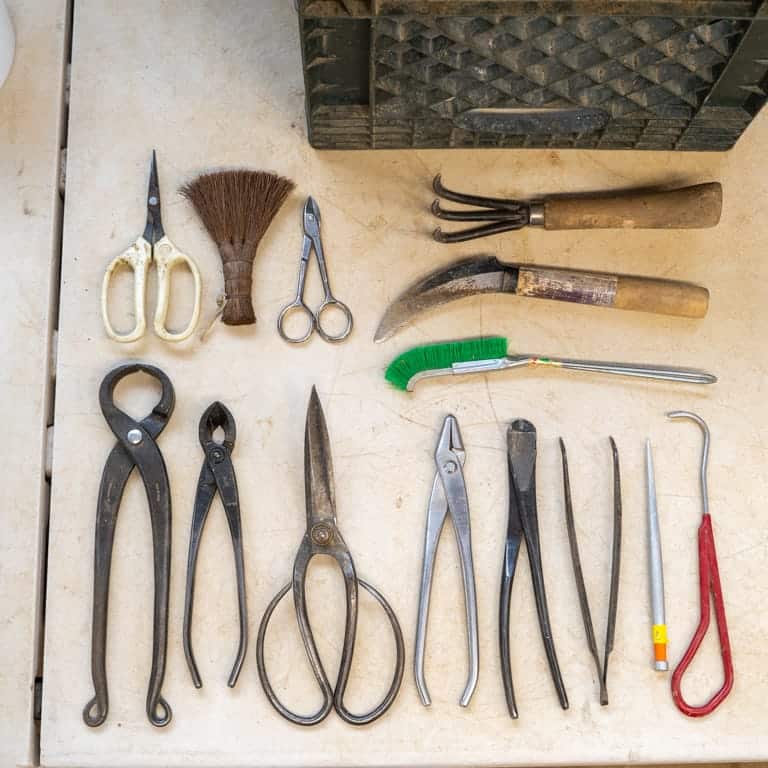
Repotting tools – root rake, wire cutter, root hook, chopsticks, pliers, bent-nose tweezers, root scissors, concave cutter
Of course, repotting 50 small pines takes a bit more time.
Seven year-old pines – recently repotted
And when I’m done repotting, I have to clean up the workshop – the actual, final step.
Workshop during repotting season.


5 comments