The Mid-Atlantic Bonsai Societies is a network of eleven bonsai clubs in New Jersey, New York, Connecticut, Delaware, and Pennsylvania. Each spring these clubs are invited to display trees at the region’s annual convention, the Spring Festival.
Peter Warren, Kaya Mooney, and I were invited guests at the event and we had a great time. In addition to performing demonstrations and leading workshops, we had the opportunity to critique the exhibit. When the time came for us to get started, Kaya and I decided to blend our groups together and do a group critique which was fun as we got to point out different things that had been done well and offer multiple suggestions for improving the trees on display.
Before we got to the exhibit, we got to enjoy trees from the Longwood Gardens’ Bonsai Collection.
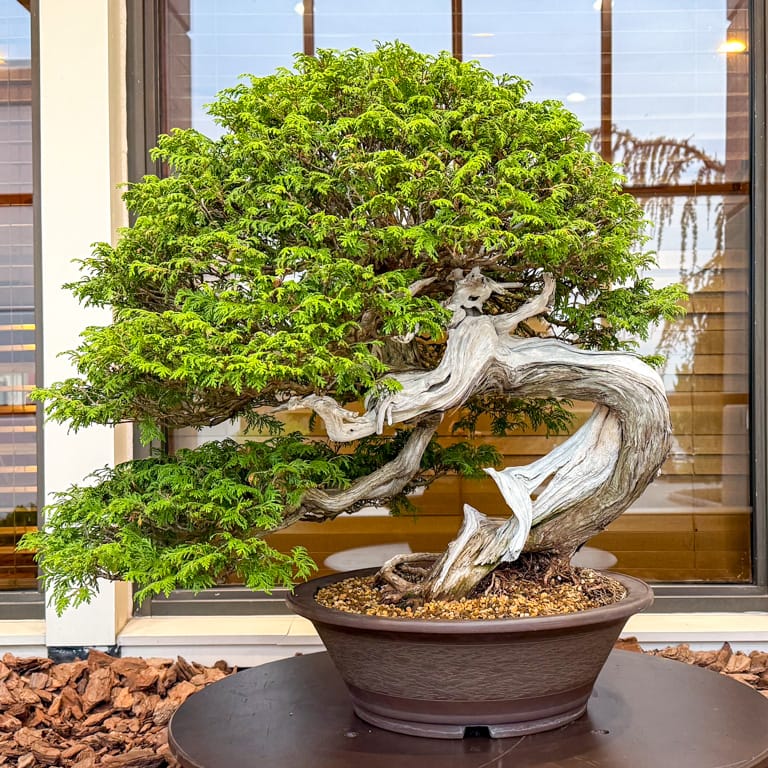
Eastern white cedar
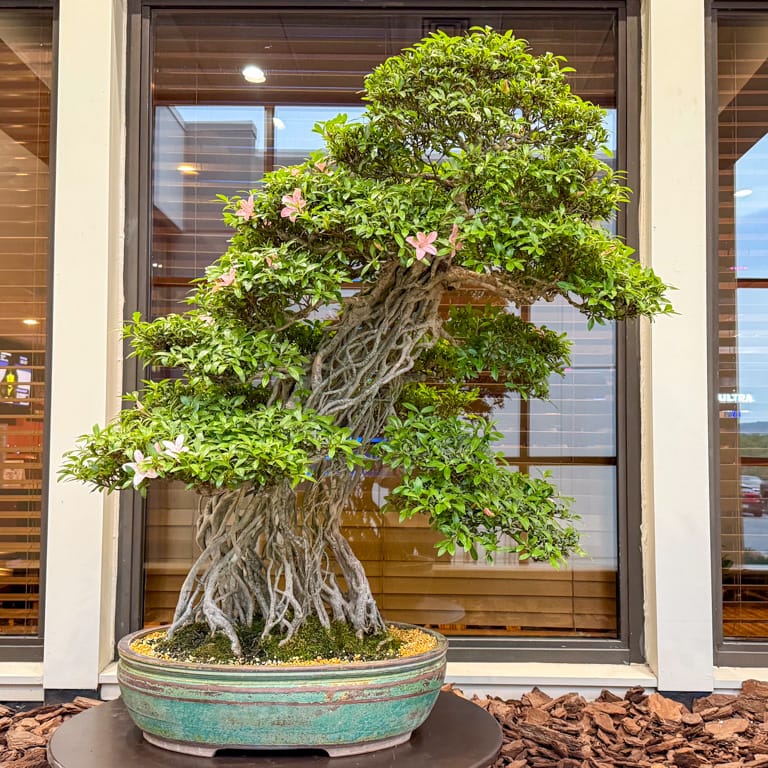
Exposed root satsuki azalea
The trees in the exhibit were mostly set up in traditional displays with stands and accents with awards recognizing excellence in several categories. One award winner was the white pine below. It’s a great example of an informal upright bonsai with good balance from the highest branches to the lowest.
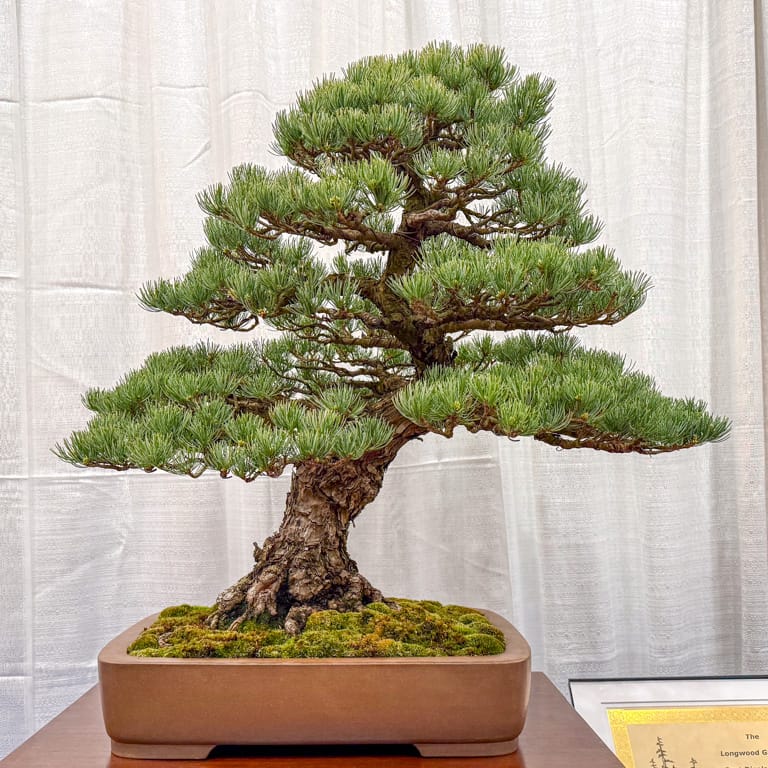
White pine
This hinoki cypress has been in training for a long time. Kaya noted that although the tree doesn’t take the typical formal upright form, it has gentle movement appropriate for a hinoki and branch pads that convey age as well as the trunk.
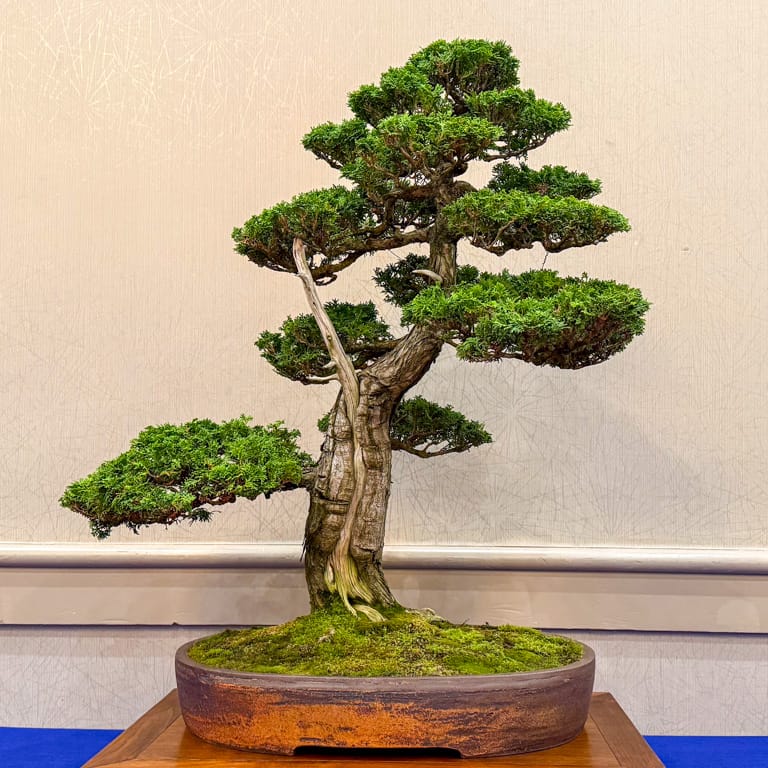
Hinoki
I really enjoyed the Chinese elm forest below as it does a good job of suggesting a much larger stand of trees growing in nature. The slender branch tips and ascending primary branches are the composition’s key features for suggesting scale.
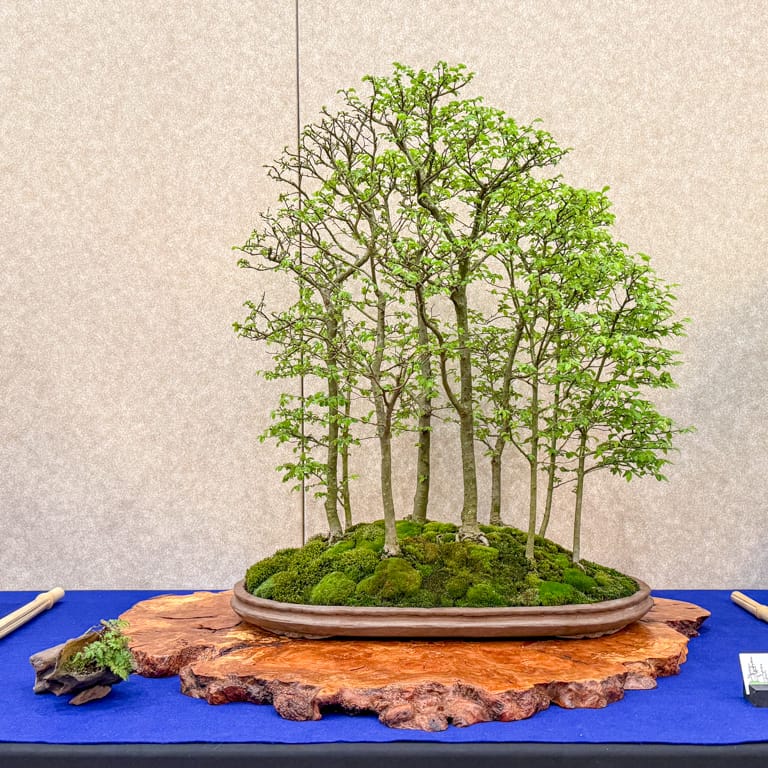
Chinese elm forest
The critique participants enjoyed an extended conversation about flow when looking at this Colorado blue spruce. Although it’s clear that the owner intends the tree to flow to the left, different elements of the design suggest flow to the right which to create an interesting composition.
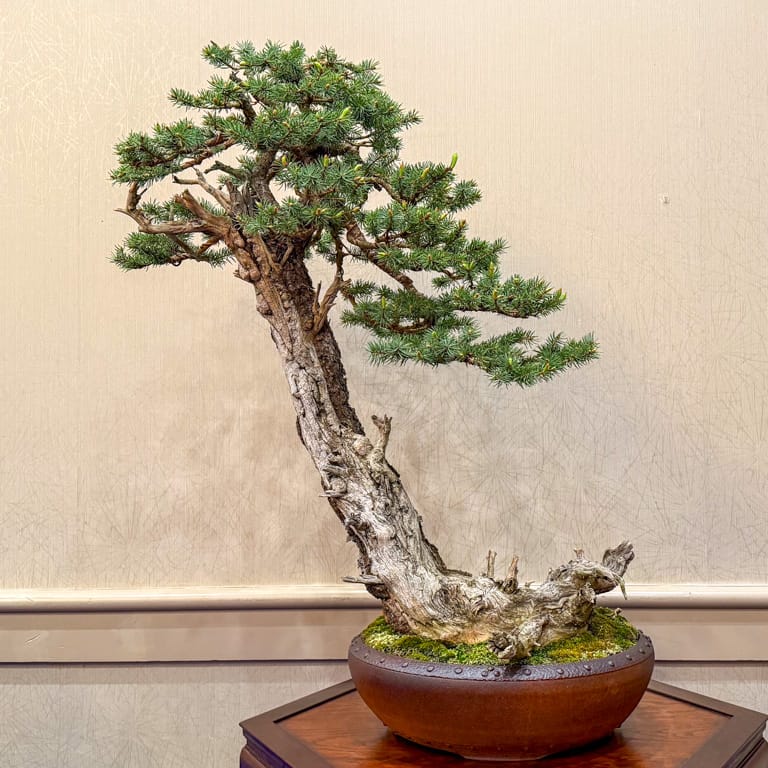
Colorado blue spruce
The larch forest below makes a nice contrast to the elm forest above. Because the trunks are larger and the primary branches extend from the trunks slightly downward, the composition creates an impression of much older trees. As fine twigs continue to develop, this group planting will convey age well.
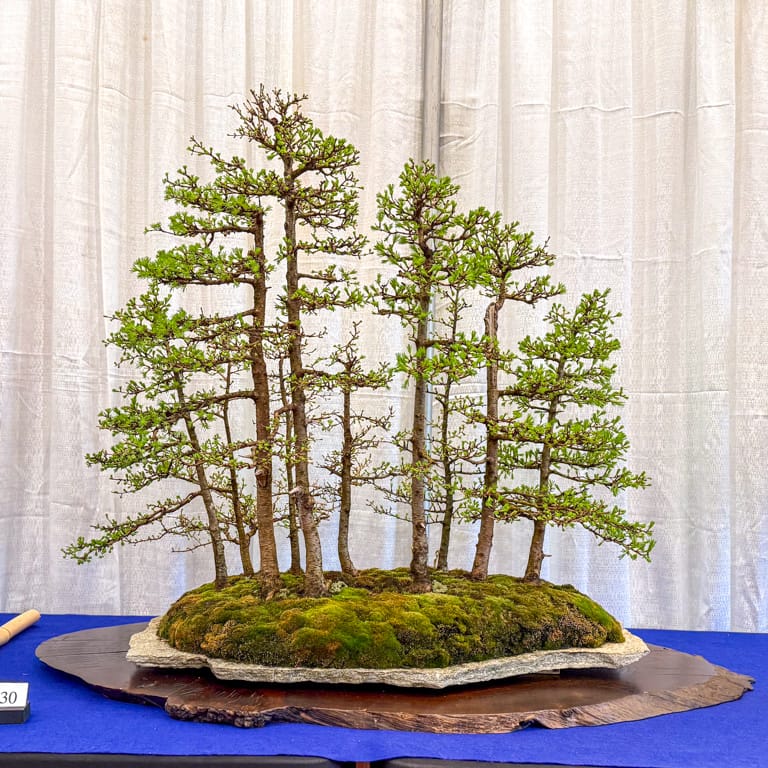
Larch forest
The last three trees were shown together in a kifu-size display. They’re great examples of the branch density that results from good techniques applied repeatedly over time.
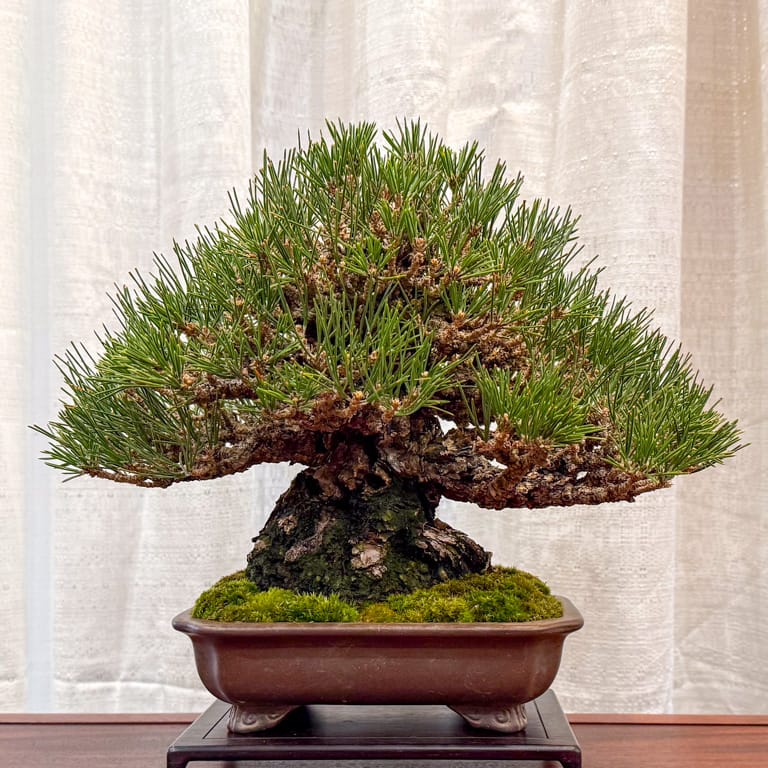
Black pine
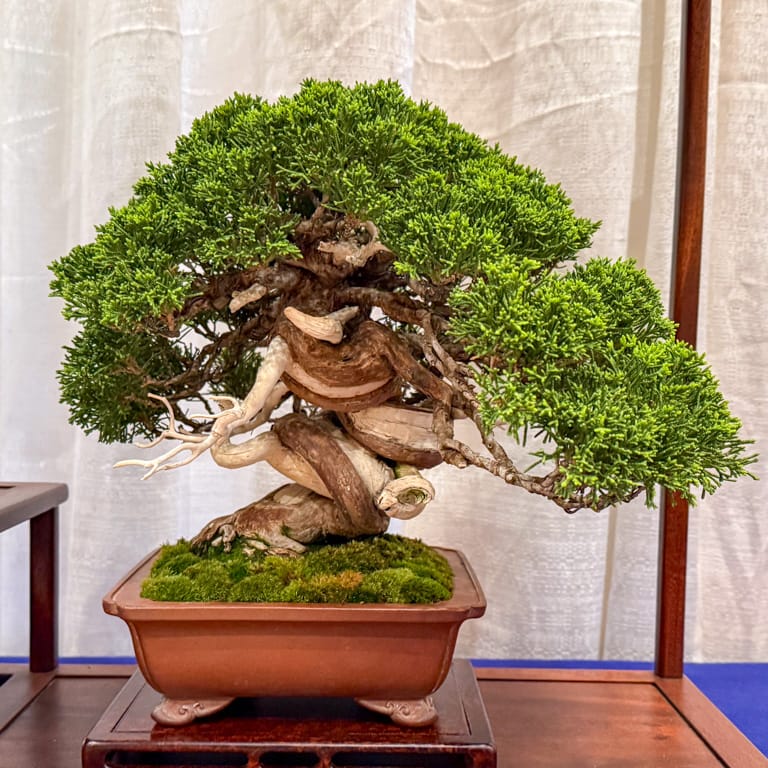
Shimpaku
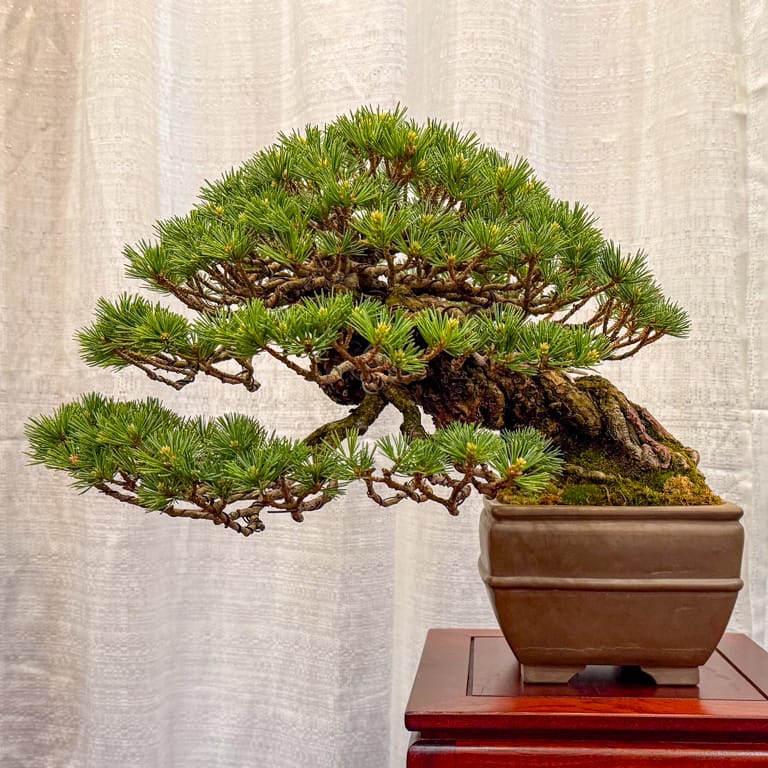
White pine
Thanks again to everyone who participated in the event and took the time to say hi. To learn more about how you can participate in the future, visit the MidAtlantic Bonsai website.
2026 Spring Intensive Dates
It’s been a number of years since I’ve made time for teaching regular classes at my workshop and I’m really excited to get back to it! I’m starting with intensives as I’ve found them to be the most effective and satisfying way to improve one’s trees and skills.
This season’s courses will cover timely techniques including pinching, pruning, and decandling plus other seasonal topics. The dates are June 6-7 for session 1 and July 11-12 for session 2.
Registration is now open – learn more about the Bonsai Development Intensives today!
Subscribe to Bonsai Tonight
New Posts Delivered Every Tuesday and Friday
Mats F Hagstrom says
Jonas Dupuich, Peter Warren and Kaya Mooney, what a powerhouse trio of talent to learn from! I have always appreciated the word “interesting” as having the ability to convey different meanings. I’m thrilled to live in an environment where we have several bonsai professionals and an overall high level of bonsai interest.
Thank you for continually sharing stories and pictures of your traven and experiences in other areas.
Mats H
Jonas Dupuich says
Thanks, Mats!