When I started growing bonsai, fertilizing was simple. I sprinkled cottonseed meal on the surface of the soil and watered with fish emulsion every few weeks.
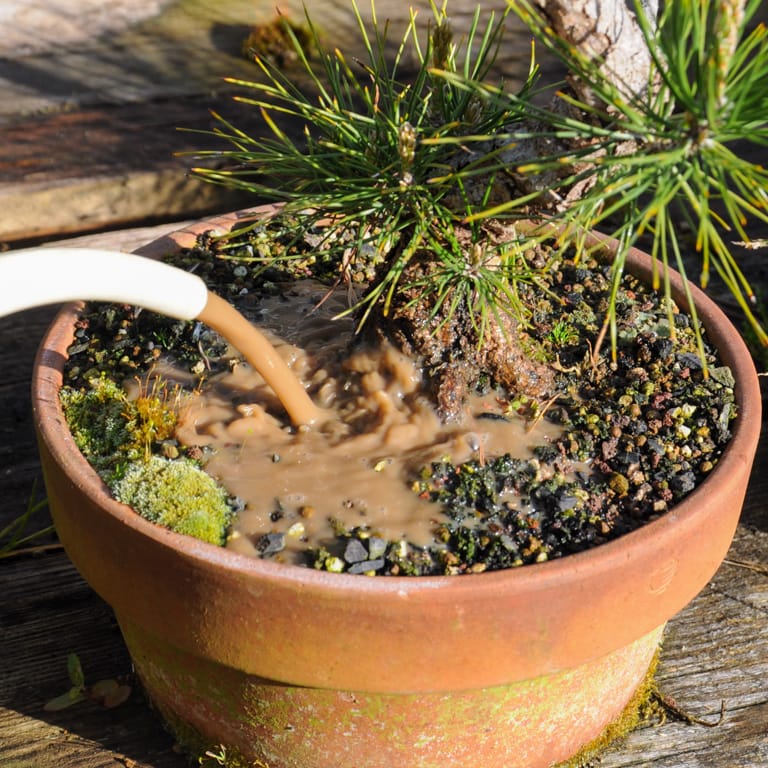
Applying fish emulsion (circa 2010)
This approach worked well for years, up until rodents began stealing the fertilizer and digging up the soil. I needed to make a change.
This began a journey, or maybe an adventure, to learn about fertilizer and water quality.
I dove into the topics, but it seemed like each successive discovery undid any previous discoveries I’d made. For example:
- I learned my pH was high (9.3)
- I learned how to fix this (by adding an acid to the irrigation water)
- I (later) learned that the water’s pH wasn’t really a problem (because the water in my area relatively clean).
It felt good to learn a scientific tidbit, and it felt great to introduce a new practice as a result of learning that tidbit. But the more I studied a given topic, the more clear it became that some bigger truth (often that my trees needed more or different nutrients) was the real culprit.
This pattern repeated itself for years until an idea popped into my head: that my water is similar to RO water (water that’s been filtered through a reverse osmosis system). I’d known that people with RO systems needed to add nutrients to their water to keep their trees healthy so I gave this a try. I used a chemical injector, a Dosatron, to test several products over the years and found that each produced different results. I also learned that chemical injectors aren’t the best solution for every garden.
Injectors are great when your trees have similar needs, but if different trees require different fertilizers, injectors can add a layer of complexity. For example, I fertilize pines heavily in spring, but I don’t apply as much fertilizer to mature deciduous trees. Later in the season, I apply more fertilizer to deciduous trees and reduce the fertilizer that pines receive. And when bonsai are in early stages of development (when I’m building trunks), I fertilize heavily all year.
To make sure every tree receives the right nutrients, I add a baseline of liquid fertilizer to my irrigation water and use solid fertilizers to supplement this. Easy, right?
Well, if that’s all there is to it, why are there signs of mineral deficiencies in the garden?
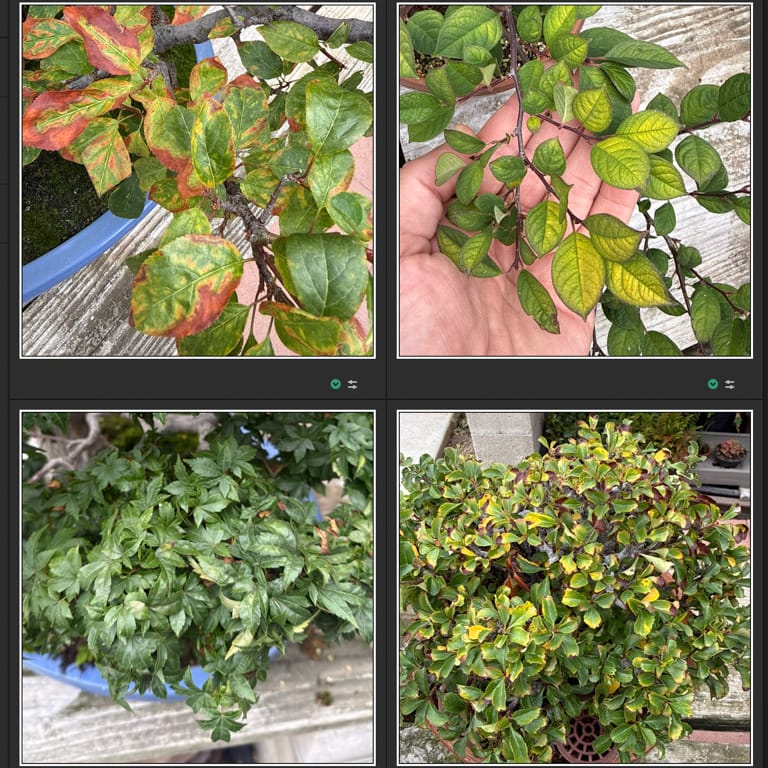
Mineral deficiencies in plum, ilex, maple, and quince
The short answer is that I’ve under-fertilized my trees for several years in a row now. I’ve failed to follow a good schedule and I’ve failed to use the diversity of products required to meet my trees’ needs.
Here’s another thing I got wrong. I looked for, and tested, what I thought might be a “good” fertilizer for the garden. What I’m doing now is taking a step back and ask a more basic question: what minerals do my trees need to be healthy?
From plant science classes I know that trees need primary nutrients (nitrogen, phosphorus, and potassium), secondary nutrients (calcium, magnesium, and sulfur) and trace elements (like iron, copper, zinc, and manganese). If my water is similar to RO water and my soil doesn’t provide much in the way of essential minerals, then I’m responsible for providing the bulk of the nutrients my trees need to be healthy with fertilizer.
I may not know the exact requirements of my trees, but thinking holistically, I can now begin experimenting knowing that I’m responsible for more than just the NPK blends found in popular products.
I’m taking a similar approach with clients and friends around the country who may have very different water sources. The first step is learn as much as possible about what’s in the water. If there’s too much of something unwanted (like sodium), we talk about strategies for improving the water quality (like using filters or RO systems). When obvious nutrients are missing, we try adding them with one or more products and seeing how the trees react.
While some trees can put on new growth within weeks after treatment, it’s more common to see changes take place over months or even years. Related, even when you see new growth after trying a new product, this doesn’t mean that one product is better than another, it just means your trees were missing something they needed. How much of it they need or when they’ll need more of it is a question best answered over time.
In light of all of this, I’m taking more notes about my approach and will continue sharing periodic updates on the topic.
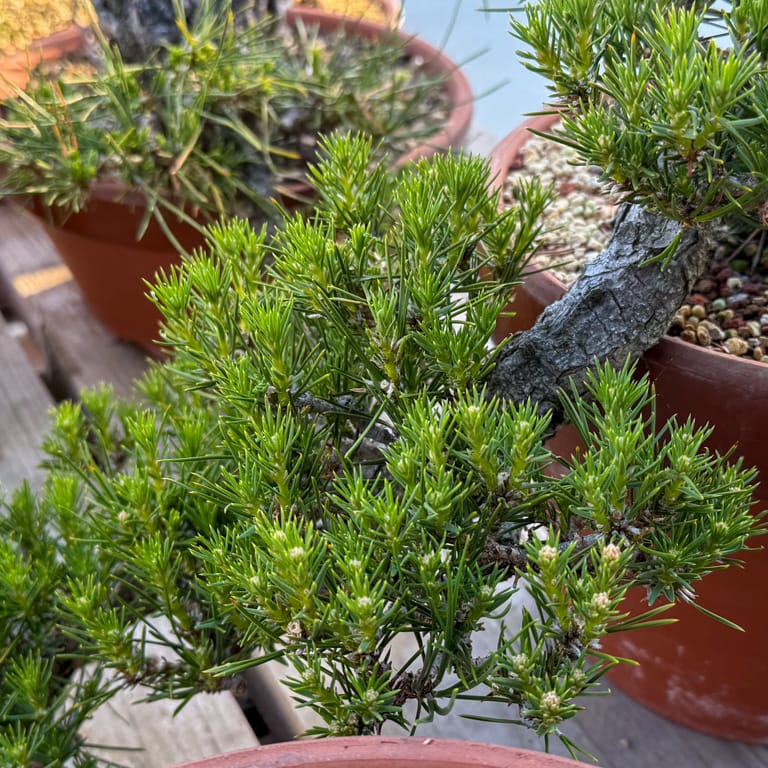
Healthy pine foliage
News & Updates
[Resources for Watering and Fertilizing Bonsai]
- Addison Galambos recently invited Eric Shrader and me to talk water quality on the Bonsai Builder’s Podcast. For more on the topic, look for his discussions with Eric Forrester.
- Addison is the author of a wonderful resource about soil and water for bonsai at Teeny Tree Science.
[Recent Podcast Episodes]
For anything other than water/fertilizer related content, check out the following discussions.
- Chat with Gianne Souza (fun traveling to learn bonsai)
- Chat with Zane from Zane’s Trees (learning, teaching, and promoting bonsai)
Subscribe to Bonsai Tonight
New Posts Delivered Every Tuesday and Friday
Christel says
Très intéressant.
Merci.
Joe Thomas says
Thank you Jonas! When you say “I (later) learned that the water’s pH wasn’t really a problem (because the water in my area relatively clean).” Does that mean 9.3 pH was OK? I thought 6.5 was ideal for most plants, as fertilizer take up is optimum. My Boston area tap water is considered really “clean”: but 9 pH. So I switched to rain water off the roof which sometimes can gets fomey because I think leaf build up in gutters. (gutter clean twice year, not practical to clean gutter in wooded areas ever few weeks) Is my tap water just ok. should I really start testing rain water… I’ll check out the podcasts Thank you
Jonas Dupuich says
Rainwater is typically pretty good, but it’s worth testing a few of the basics just to see if there’s anything unusual about the water.
As for the pH, that’s right, much lower pH is preferable. However, when the water is very clean, the root environment can neutralize high pH so the roots can get the nutrients the plant needs.
Dennis says
This is great, I don’t see water quality discussed often. Akadama is very forgiving with ph and nutrient buildup compared to soil substrates but it’s probably still a good idea to have a baseline. I keep a 30 gallon tote with an aquarium pump & air stone to boost dissolved oxygen and removal of chlorine. I believe I get a better moss response/growth with non-chlorinated water. I ph the water down to around 6.0 as my city water is well above 7. I wish I had a more exacting approach for the application of micronutrients but I do not so I add a dose of calMag to my feedwater every few weeks.